Social Media Monitoring: How to Track Brand Conversations
Last Updated: September 30, 2026
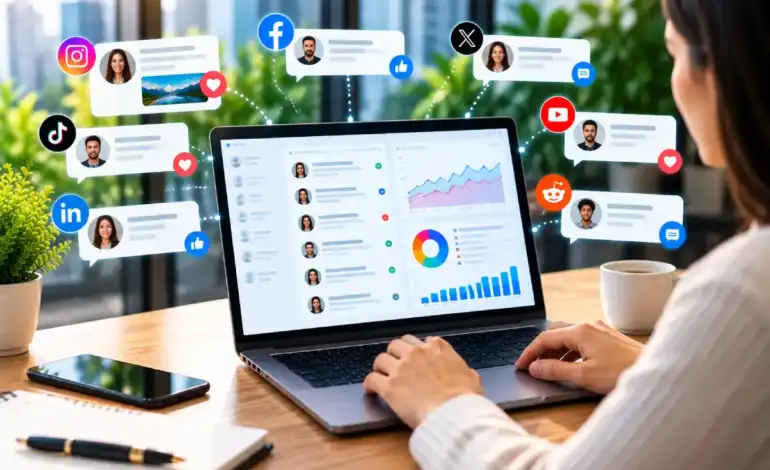
If you rely on platform notifications you will only see half of the conversation, about your brand. This guide focuses on Social media analytics from the monitoring side: what your business should actually track, how to catch mentions that native tools miss, where monitoring ends and listening begins and how to respond once you find something worth acting on.
What is social media monitoring?
Social media monitoring means watching what people are saying about your brand as it happens so your team can answer while the conversation is still live, than discovering it days later.
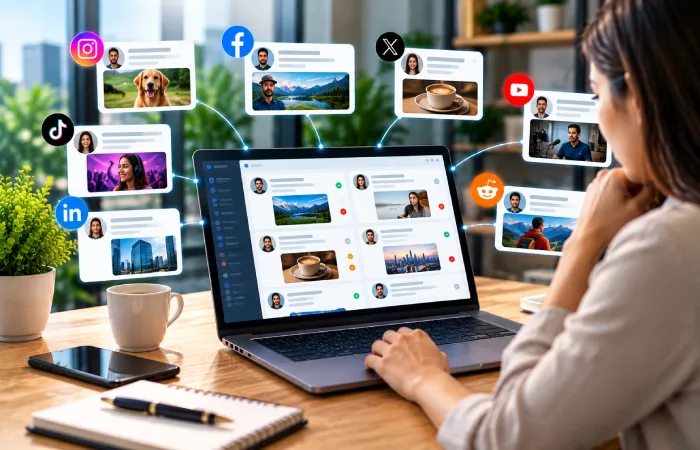
It covers both tagged mentions where someone uses your handle or @-tags your account and untagged ones where your brand name appears in a caption comment or post without any tag all. Most native platform notifications only reliably catch the first kind.
What should your business monitor?
Direct brand mentions, tagged and untagged.
Your handle, your brand name spelled correctly and with common misspellings, and any product names people are likely to reference by name.
Competitor mentions.
Tracking how often and how positively your competitors are talked about gives information, for understanding your own numbers. It also shows where competitors might be getting feedback for things that you do well.
Industry and category keywords.
Terms your potential customers use when discussing a problem your product solves, even when they’re not mentioning any brand by name yet.
Branded and campaign hashtags.
You can use any hashtag connected to a campaign or product launch. This way you get a sense of how the push is doing in actual conversations. It’s not about what you post. You see how people are talking about it across the platform.
How to track brand mentions and conversations
Start with the free, native option, but know its limit going in.
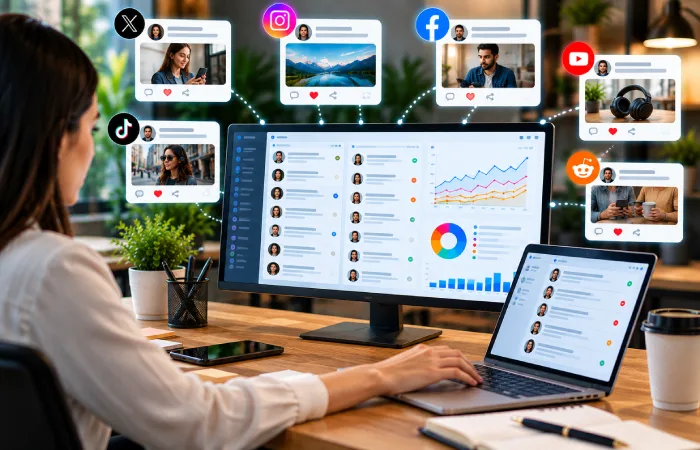
X surfaces @-mentions directly in your notifications, and Facebook does the same for tagged posts and comments on your Page. The real gap is untagged mentions: native search is limited for catching a brand reference that isn’t tagged, which means a customer writing your brand name in a caption without an @ symbol can slip past your notifications entirely.
A dedicated monitoring tool helps close that gap by searching for the brand name not just relying on hashtags or tags. It looks across a larger part of public conversations. Of sticking to the exact brand name build your keyword list to include common misspellings, product names and real phrases that customers actually say. This way even if someone mentions your brand in a different way you won’t miss it. A genuine mention won’t slip through just because the wording was a little, off.
Social monitoring vs social listening

Monitoring and listening both look at the conversations but Monitoring and listening ask different questions. When people mix up Monitoring and listening teams end up expecting the result, from the wrong tool.
Monitoring is about reacting and taking action away. A specific comment comes in. Someone answers. It is like customer service than like research. Listening is about taking action before something happens and thinking ahead. Of just responding to one unhappy customer it looks at hundreds or thousands of comments to find a trend. For example it might find that many negative comments this month all talk about the problem, with shipping delays.
A way to keep the difference clear: monitoring shows you that someone is talking to you right now and needs a reply. Listening shows you what a large group of people have been saying over time and what that means for strategy. Most businesses need monitoring going on all the time and listening reviewed at a pace on a regular basis.
How to respond to insights from social monitoring
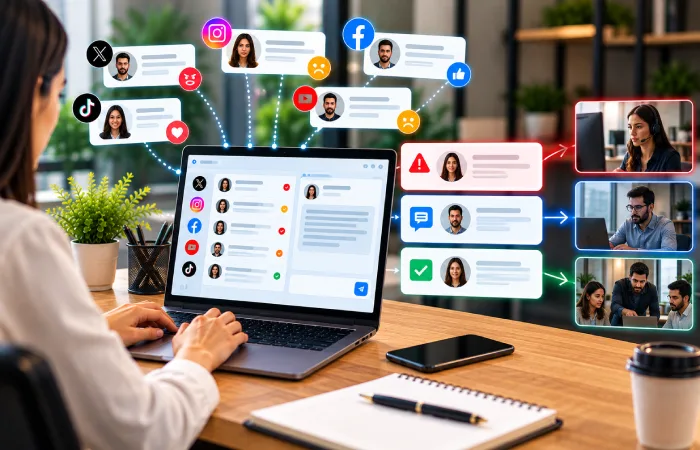
Speed matters more than most teams realize. Sprout Socials 2026 pulse survey shows that 68% of consumers expect a brand to respond within 24 hours. More surprising 24% want a reply in just one to two hours and 14% expect a response in under an hour. These numbers are not just random. They show what people actually want when they engage on media. Setting response-time targets based on these time windows—not on general email support standards—is how brands can truly meet customer expectations on social. It’s not about being fast, in a sense. It’s about being fast where it matters.
Triage before you respond.
Not every mention requires the level of urgency. A direct complaint or a sudden rise, in feelings needs quick action; a neutral or positive mention can usually be handled during a regular response time.
Match the channel to the complaint.
Most consumers prefer to handle problems, in private than make them public. That’s why sending a complaint to direct messages is usually a good choice.. It’s important that your team stays on top of it once the conversation moves there.
Feed patterns back to the team that can actually fix them.
A single complaint is a response task.. If there are three complaints about the same issue, within a week that’s a signal. That’s something escalating to product or operations. It’s not about answering each one separately.
Frequently asked questions
What’s the difference between social media monitoring and social listening?
Monitoring is reactive: it means watching for mentions as they happen so a team can act fast just like customer service does. Listening is proactive: it means looking at trends in lots of conversations, over time to help shape plans like market research does.
Can I do social media monitoring for free?
Native platform notifications can catch mentions that are tagged for free. They do not work well for mentions that are not tagged. Therefore a company that wants to catch every mention, not the tagged ones will usually need a special monitoring tool in the end.
How quickly should a brand respond to a social media mention?
Most customers hope to get a reply within 24 hours. A big number want something much quicker like 1 to 2 hours or even less than an hour for serious problems. Keeping goals, around those time frames makes expectations honest instead of too high.
What should a small business monitor if it can’t track everything?
Start with brand mentions both tagged and untagged since those are the highest-priority signals, for response and reputation. Once the habit of tracking core brand mentions is firmly established, add competitor and industry keyword tracking.
Does social media monitoring help with more than customer complaints?
Yes. Beyond responding and managing reputation monitoring helps uncover people who are already speaking well about your brand—your potential advocates. It also shows what your competitors are doing and gives signs of possible problems, with a product or service before they grow into bigger issues.
Where to start this week
Search your own brand name on the platform where you’re most active, without the @ symbol, and see what turns up that your notifications never caught. That gap is the clearest evidence of whether native tools are actually covering what you think they are.

Creative marketing enthusiast sharing practical insights on digital growth, branding, and online strategies. Passionate about helping businesses succeed with simple, effective, and result-driven marketing solutions.