Emerging Social Networking Apps Changing Online Communication

Last Updated: September 18, 2026
Let’s be honest — most people aren’t thrilled with their social media experience right now.
Instagram feels like a shopping mall. X is an arguments forum. Facebook is where your relatives argue about politics. And TikTok… well, depending on where you live, it might not even exist by the time you read this.
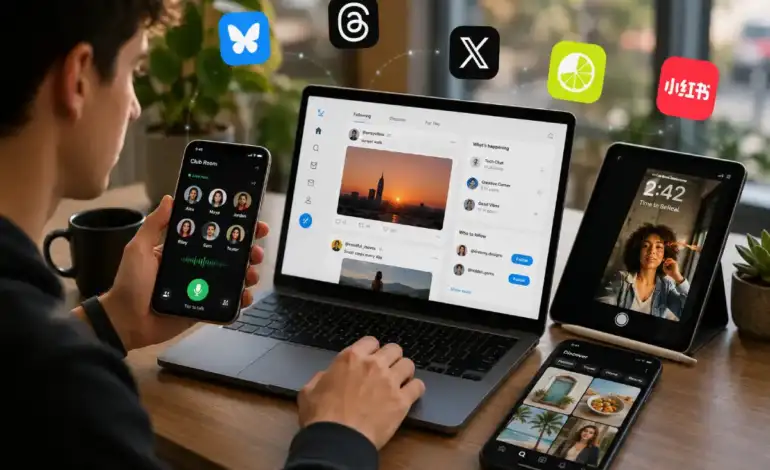
So it’s no surprise that emerging social networking apps are picking up serious steam in 2026. Not because they’re perfectly polished, but because they’re solving real problems that the big platforms stopped caring about years ago.
This article walks you through what’s actually worth your time — what’s driving these new platforms, which ones deserve a download, and whether any of them stand a real chance of sticking around.
What Makes an App a Social Media Trend?
Not every new app becomes a cultural moment. Most of them launch with a burst of press coverage and then quietly disappear by Q3.
The ones that actually stick tend to share a few things in common. They solve a specific frustration users already have. They grow organically — through group chats and word of mouth, not influencer partnerships. And they usually attract a pretty specific type of person before they try to attract everyone.
The platforms getting real attention in 2026 are the ones offering simpler feeds, fewer algorithms, real-time interaction, and more unfiltered content — not more features layered on top of an already bloated experience.
There’s also a timing element. Those startups that entered TikTok back in 2020 have years of organic reach head start vs brands who have only arrived at 2024. The same revolution is happening on many other platforms right at this moment.
What separates a real trend from a gimmick:
- It fixes something people actively complain about
- It has retention, not just downloads
- There’s a clear community forming around it, not just a user count
- Competitors haven’t copied the core feature yet
If an app checks those boxes, pay attention.
Read More: New Social Media Apps Trending Right Now
New Features Users Love
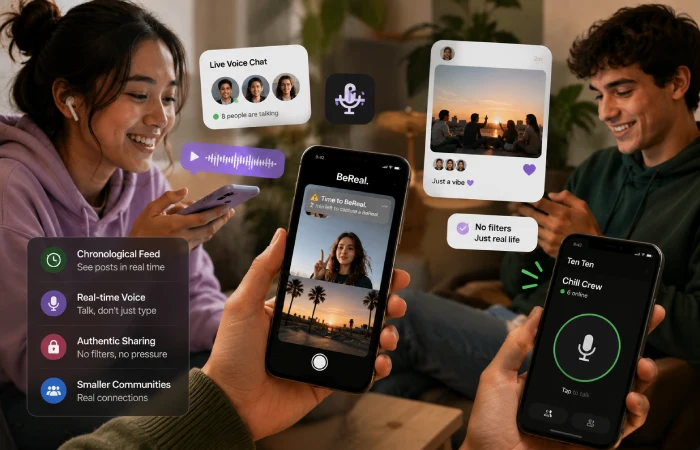
The features that are actually resonating with users in 2026 aren’t complicated. Most of them are reactions to things the big platforms have done wrong.
Chronological feeds are making a comeback in a big way. People got tired of seeing posts from three days ago because an algorithm decided that was more “engaging.” Control over your own feed, even basic chronological control, feels like a luxury at this point.
Real-time voice interaction is also having a moment. Ten Ten, a walkie-talkie app built for teen audiences, has crossed 21 million downloads since launch — which is a remarkable number for an app that doesn’t do video, doesn’t have a content feed, and doesn’t try to be everything.
Then there’s the authenticity push. BeReal lets users post one unfiltered photo per day showing what they’re actually doing. That’s it. No editing, no scheduling, no performance. It’s the exact opposite of a curated Instagram grid — and for a lot of people, that’s the appeal.
On the smarter end of things, Noplace has built out three feed types: a global discovery feed, a friends-only feed, and an AI-curated feed that recommends content based on how you actually use the app. It’s personalization without the creepy “we know everything about you” energy.
The pattern is pretty clear: users don’t want more power from their social apps. They want less noise, more genuine connection, and some sense that they’re in control of what they see.
Emerging Social Apps Worth Trying
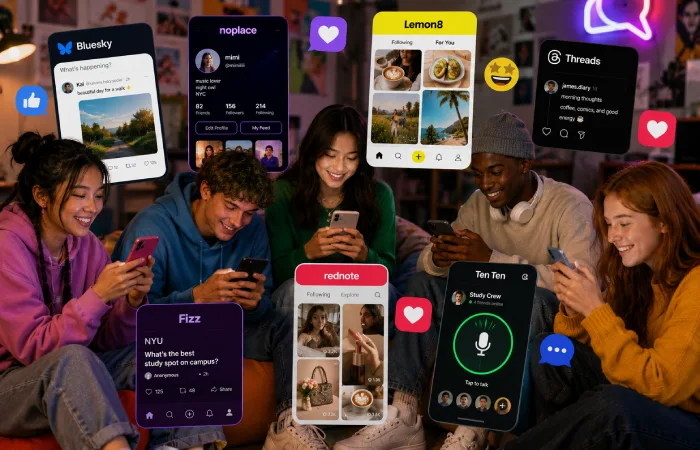
There’s no shortage of new platforms claiming to be the next big thing. Most aren’t. But a handful of them have built real communities and earned a spot on the shortlist.
Bluesky
Bluesky is what you’d build if you started Twitter from scratch in 2023, knowing everything that went wrong. It runs on user-controlled algorithms with portable identity, meaning if the platform ever goes sideways, your followers and your presence go with you — you’re not locked in. It’s gained a strong foothold among journalists, writers, and anyone who genuinely misses what early Twitter felt like.
Noplace
Noplace has been described as a mashup of Twitter and Myspace for Gen Z — a text-focused app where users can build colorful, customized profiles and connect with people based on shared interests. It sounds niche, but that’s exactly why it works. It’s not trying to be a platform for everyone.
Lemon8
Lemon8 sits somewhere between Instagram and Pinterest — photo and video content with a strong lean toward beauty, travel, and everyday lifestyle, with 18.7 million downloads recorded in 2024 alone. Lifestyle creators have found a comfortable home here, partly because the algorithm isn’t punishing them for not posting Reels every 48 hours.
Threads
Threads crossed 300 million monthly active users in early 2026, which officially puts it in “not really emerging anymore” territory. But plenty of brands and creators still haven’t built a real presence there, so the organic reach window is still open — just closing.
Fizz
Fizz is an anonymous social network built for college campuses. Students join with their school email and can post, share memes, run polls, or ask questions without attaching their name to any of it. There’s also an in-app marketplace for buying and selling between students. It won’t dominate your For You feed, but it’s become a genuine utility for a very specific community — and that’s often where durable platforms start.
RedNote
RedNote blends short-form video with product discovery — think TikTok crossed with Pinterest. When TikTok’s U.S. future looked uncertain, RedNote benefited from a wave of users looking for somewhere to land. Whether that momentum will continue remains to be seen, but the platform already is set up and has a format that works.
Privacy and Security Considerations
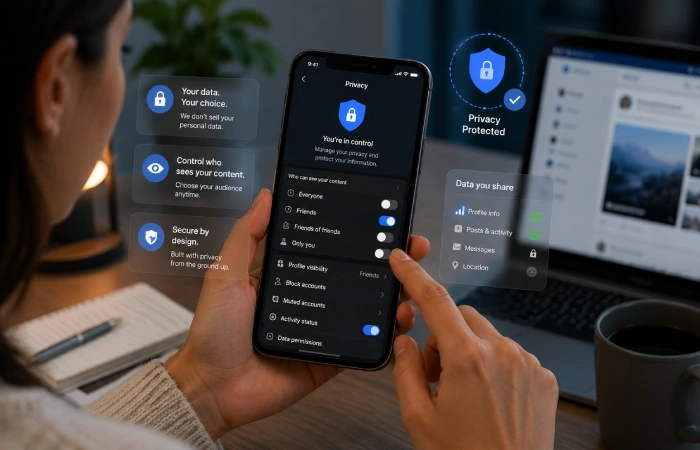
Here’s something most “best new apps” articles skip past: what are these platforms actually doing with your data?
It matters. And it matters more now than it did five years ago, because people have seen too many examples of how things can go wrong.
Independent research in 2025 found a significant gap between older platforms and newer ones on privacy — Facebook, TikTok, and Instagram collect some of the widest data footprints in the industry, while many newer alternatives rank considerably better on privacy defaults. The Mozilla Foundation’s Privacy Not Included research has repeatedly highlighted how major social platforms collect and process extensive user data, making privacy practices an increasingly important factor when choosing new social apps (Mozilla Privacy Not Included).
The shift driving a lot of this is decentralization. Rather than one company owning the platform and all your data, decentralized networks like Mastodon allow users to join independent servers that communicate with each other. The concept of decentralized social networking is also gaining institutional support through the World Wide Web Consortium’s Social Web standards work, which promotes open protocols and interoperability between platforms rather than closed ecosystems (W3C Social Web Activity). Nobody’s selling your behavior to advertisers when there are no advertisers to sell it to.
Decentralized platforms also give creators something centralized ones can’t — portability. If a superior interface comes after the evolution of the present one, the author can migrate without loosing users or begining from scratch.
Before you commit to any new platform, it’s worth asking a few basic questions:
- Does the platform sell user data, or is it ad-free?
- Can you delete your account and data completely?
- What permissions does the app ask for on your phone?
- Is there end-to-end encryption for private messages?
- Is content moderation transparent?
None of this needs to be complicated. Or if a app can’t answer those questions clearly in its privacy policy, that’s an answer.
Read More: Secure & Private Social Media Apps
Will These Apps Replace Established Platforms?
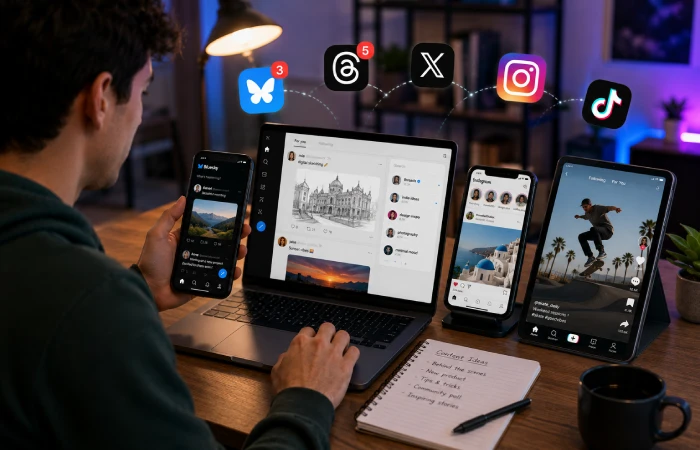
Probably not — but that’s kind of the wrong question.
There are still 3 billion monthly active Facebook users. YouTube, WhatsApp and Instagram boast over 2 billion each. Those numbers don’t collapse overnight. They don’t even decline quickly. Legacy platforms have deep roots — family networks, business pages, years of content history, and habits that are genuinely hard to break.
But “replacing” isn’t really what’s happening. What’s happening is fragmentation — and the emerging apps are winning in the gaps.
People might use Bluesky for public conversation, BeReal with close friends, Lemon8 for content discovery, and Discord for their community. None of those apps “beat” Instagram. They each carved out the specific thing Instagram stopped doing well.
The window for early-mover advantage on social platforms is always temporary, but it’s real while it’s open. Creators who figure out which emerging platform matches their audience are building organic reach right now that will be much harder — and more expensive — to replicate in two or three years.
So the practical takeaway isn’t “should I switch.” It’s: what is the app I’m already on doing badly, and is there something new that actually solves that?
Read More: Social Media Apps for Lead Generation
Final Thoughts
The social media landscape in 2026 isn’t waiting for one big platform to “win.” It’s splintering into communities, use cases, and values — and the apps gaining ground are the ones that figured out what a specific group of people actually needed.
That’s a good thing, honestly. It means you have real options. Not just newer versions of the same thing.
Emerging social networking apps aren’t perfect. Many of them are still early. But the ones worth trying aren’t asking you to rebuild your entire social life — they’re just asking for a download and an hour of your time. That’s a pretty low-risk experiment for finding something that might genuinely fit how you want to connect.
Start with one. See what sticks.
FAQs
What are the best emerging social networking apps in 2026?
Bluesky, Noplace, Lemon8, BeReal, Threads, Fizz, and RedNote are all worth watching. They each serve different audiences and communication styles — there’s no single right answer.
Are new social apps actually safer than Facebook or Instagram?
A lot of them, yes — especially decentralized platforms like Bluesky and Mastodon that don’t run on ad revenue. Always check the privacy policy before joining in, whatever the site.
What does decentralized mean for a social network?
It means that no one company owns the platform or has ownership of your data. You hop onto servers or use open protocols that offer you greater ownership of your identity and content and makes them available to you.
Which emerging app is best for Gen Z?
Noplace and BeReal have the strongest Gen Z followings. Both place a premium on authenticity and self-expression over vanity metrics such as Follower numbers.
Will these apps ever replace Instagram or TikTok?
Unlikely in the near term. But they don’t need to — they’re succeeding by doing specific things better, not by trying to do everything.
How do I pick which new social app to try?
Reflect on what the biggest pain point on your existing platforms. Then search for an app built explicitly to fix that issue. One well-focused download is worth five unfocused ones.

I’m Thomas — Editor & Admin of incmarketingplace, Blogger, and Senior SEO Analyst. writer at Inc Marketing Place, sharing insights on SEO, branding, content marketing, and online business growth. I focuses on creating practical and easy-to-understand content for marketers, entrepreneurs, and growing businesses