

Video Content Marketing Guide: Strategy, Types & Best Practices

Last Updated: September 18, 2026
Video used to be the format businesses added once everything else was working. That’s no longer a safe assumption to build a content plan on — video has become table stakes across nearly every channel, and skipping it means competing for attention with one hand tied behind your back. TThis is about why video is relevant now, how to position yourself on YouTube and in short form, practical ideas for content, and a consistent system to actually create it, as a long term content marketing strategy rather than a one hit campaign.
Video content marketing is defined as “the creation and distribution of video as a marketing delivery platform designed to inform, engage and convert prospects and customers”.
Video marketing statistics 2026

Video adoption among businesses has stopped growing and started holding steady at a high level, which changes what the statistics actually mean for a company deciding whether to invest. Wyzowl’s 2026 State of Video Marketing report found that 91% of businesses now use video as a marketing tool, a figure that has held in that range for three consecutive years. That plateau signals saturation, not opportunity by default — having video at all no longer sets a brand apart the way it did five years ago.
What still moves the needle is production quality and platform fit, not just presence. A few figures worth planning around:
- Most marketers see a positive ROI to using video, but the difference between identifying a “positive” and a “strong” ROI seems to be relative to how well content fits–platform screens.
- The most successful format in terms of engagement and reach continues to be short-form video, however it is worth noting that long-form content still wins in SEO value and depth of leads generated.
- AI-enabled production (script, edit and captioning) is increasing speed; however it cannot replace a distribution and attribution strategy.
The practical takeaway: the era of “just start making videos” is over. What separates results now is matching format and length to platform and matching platform to where a specific audience actually spends time.
YouTube marketing strategy

They rarely take off these channels, that is. YouTube is as much a search engine as it is a social network, so content must be centered around what users are actually seeking, rather than what a publisher is eager to trumpet. Filling out every detail in your channel, including keywords, optimizing or renaming video titles and descriptions, and creating appropriate categorization every step of the way all impact search rank of your video the way on-page SEO does for your blog post.
A workable starting structure:
- Set one. loose goal of anything Brand awareness, some lead gen or a directly sale pull for various types of content.
- Investigate what your target market are really typing into YouTube, rather than Google, as the search intent can differ between sites.
- Develop a regular posting rhythm, not an erratic one; it‘s better to have a channel that at least maintains a regular schedule of every two week uploads than one that uploads ten videos in a single month then disappears for the next.
- Use end screens, cards and effective calls-to-action to direct viewers to the next action visit the website or subscribe.
- Track outcomes tied to business goals, not just views and subscriber counts, which don’t answer to a budget review the way conversions do.
Short form video marketing
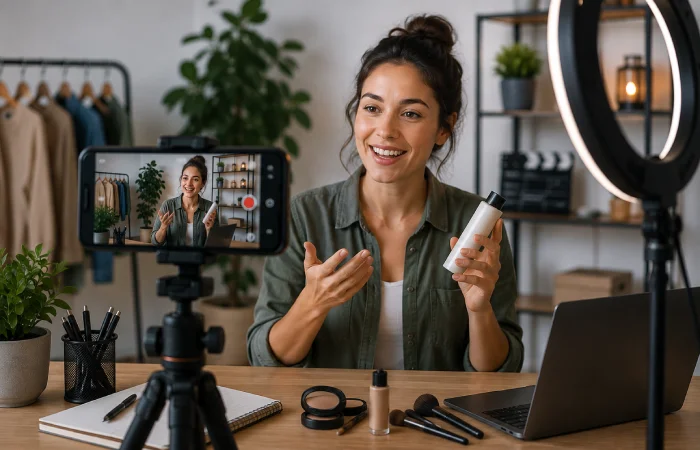
Short-form video – usually a minute or less on TikTok, Instagram Reels or YouTube Shorts – now reigns as the most-engaging type of content, but that doesn‘t necessarily mean every platform is the best value. Teleprompter‘s 2026 short-form video plan proposed around a third of marketers believe 31 to 60 seconds is the sweet spot, but a sizable chunk prefer 21 to 30 seconds – shorter than most companies’ gut reaction.
Platform choice matters more than volume:
- TikTok has the longest average session time but is subject to regulatory uncertainty in some markets, which should be taken into account before aligning it as a framework to single-platform strategy.
- YouTube Shorts leverages the integration with long forms of YouTube, providing a way for a viewer to go from a one-minute discovery video, to the other content on a channel.
- Instagram Reels seem to respond better to more casual, behind-the-scenes content than over-polished, ad-like production.
If you have no large production team, then spreading your business across two or more platforms is a sensible way to prevent overnight losing your channel‘s reach due to a change to one algorithm or policy.
Video content ideas for business

The quickest way to run out of video ideas is to be starting from scratch every single time and not repurposing or using natural content in the business.
Formats that consistently work without requiring a full production crew:
- Here‘s a how-to and tutorial type videos that walk through a process or set of steps similar to a “how-to“2” style video.
- Behind-the-scene footage of the process, such as how a product is manufactured or a service is provided
- Customer testimonials and short case-study clips
- Founder or expert interviews, recorded once and cut into several shorter pieces
- Product demos focused on a single feature rather than a full walkthrough
- Q&A videos answering the questions customers actually ask most often
- Quick myth-debunking or misconception-correcting clips tied to the industry
A single 30-to-60-minute recorded interview or webinar can typically be cut into five to ten shorter clips, which solves the “we don’t have enough ideas” problem more reliably than brainstorming from scratch every week.
How to create video content

A repeatable production process matters more than any individual piece of equipment, because consistency is what actually builds an audience — a slightly rougher video published on schedule usually outperforms a polished one that shows up once a quarter.
A workable workflow:
- Begin with the audience not the camera. Define the question or moment being addressed by the program before settling on format or duration.
- Script the first three seconds deliberately. Attention drops off fast on every platform, so the opening line or shot needs to earn the next ten seconds, not ease into the topic.
- Film in batches. Recording several videos in one session cuts setup time dramatically compared to a new shoot for every single piece.
- Edit for the platform, not for the content. Having a long form YouTube video as well as a 30second Reel cut from the same tape requires very different pacing, not simply different lengths.
- Publish with captions by default. Many viewers watch with sound off, especially on social feeds, so captions aren’t optional polish — they’re part of the content being watched.
- Review performance against the original goal, not vanity metrics — a video optimized for awareness should be judged on reach and watch time, not click-throughs it was never designed to drive.
FAQ
What is video content marketing?
Video content marketing is the practice of producing and spreading video (how-to, explainer videos, behind-the-scenes, reviews/testimonials, and more) across the internet (via YouTube, TikTok, or a business‘s website) to capture audiences, inform, and persuade.
How do I start a YouTube marketing strategy for my business?
Begin with one focused goal (awareness, leads or sales) and then figure out what people your channel targets are searching for directly on YouTube. Establish a steady content publishing schedule long before agonizing over a video production quality. Since irregular publishing schedule frustrates you too, it hampers the channel growth more than not-so-polished videos.
What’s the ideal length for a short-form video?
Most marketers prefer the 21-to-60-second window, with about a third opting for the 31-to-60-second range. The appropriate length also varies according to platform and how swiftly the message can be received something like a tutorial might require a little more time than a quick behind-the-scenes tour.
How often should a business post video content?
As just stated before, regularity beats raw number of posts. It all depends where a channel develops an expectation of publishing, a reliable schedule of every one to two weeks is statistically “better” than the same channel depositing all its new content in periodic “bunches” of posts.
Start with one video you already have the footage for
Before you script anything new, look at your last interview, webinar or customer call your team recorded and chop it into three brief segments using the workflow above. That one task will validate batching and platform editing without requiring any new lesson plan and produce, generally, a week or two of content from something you already have on hand.

I’m Thomas — Editor & Admin of incmarketingplace, Blogger, and Senior SEO Analyst. writer at Inc Marketing Place, sharing insights on SEO, branding, content marketing, and online business growth. I focuses on creating practical and easy-to-understand content for marketers, entrepreneurs, and growing businesses