B2B Lead Generation: The Complete Playbook for 2026

Last Updated: September 18, 2026
Most B2B lead generation advice still centers on a form: gate an ebook, run the ad, wait for the submission. That model is increasingly unreliable, since the large majority of B2B buyers now research privately before ever raising a hand. This playbook covers the funnel logic that replaces form-first thinking, the two channels doing the most work in 2026 — LinkedIn and cold email — the tools worth using, and concrete examples of what this looks like running, as part of a broader lead generation strategy.
B2B lead generation is the process of identifying and capturing contact information from businesses that fit a company’s ideal customer profile, then moving them toward a sales-qualified conversation.
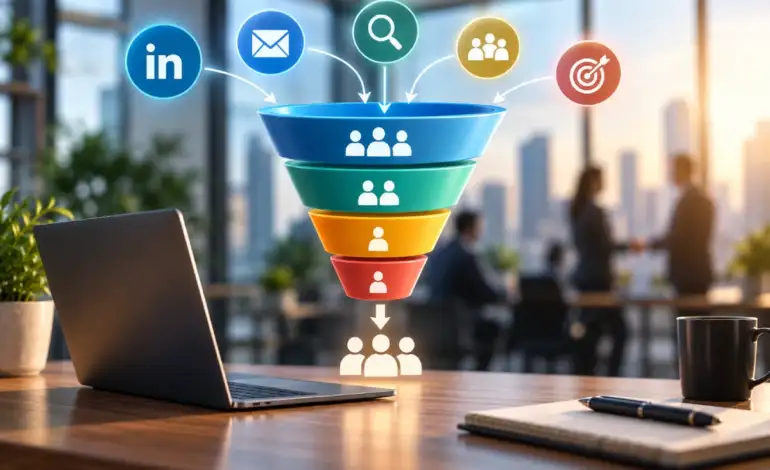
B2B lead generation funnel
A B2B lead generation funnel captures interest at multiple points rather than waiting for one form submission at the bottom. That shift matters because roughly 95% of B2B website traffic never converts on a form, according to Zeliq’s 2026 lead generation playbook — meaning a funnel built entirely around gated content is missing the overwhelming majority of the people already interested enough to show up on the site.
The practical fix is capturing interest through more channels and lower-commitment actions: intent signals (a pricing-page visit, a repeat blog visit), social engagement, and outbound touches all feed the same funnel rather than only counting form fills as “real” leads. Once a lead enters the funnel through any of these paths, what actually triggers at each funnel stage — the automation side of this, as opposed to the channel-and-capture side covered here — determines whether that early interest turns into a scored, sales-ready contact or just sits in a list.
LinkedIn B2B lead generation
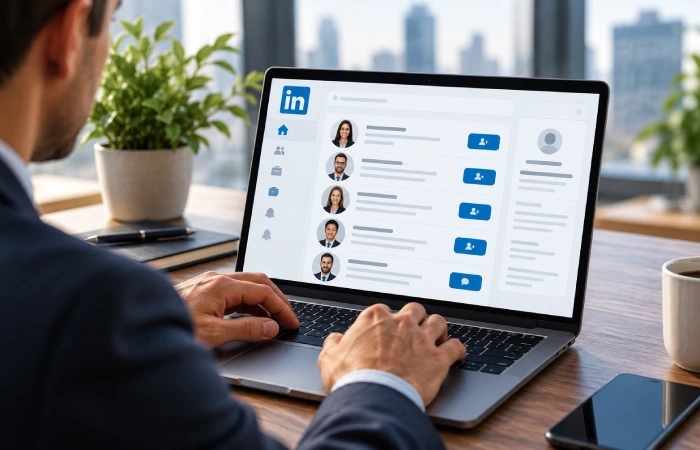
LinkedIn generates approximately 80% of all B2B social media leads and 89% of B2B marketers use it to generate leads, thus virtually every guide recommends it as an obvious primary channel. What most guides don’t mention is what those engagement numbers actually represent: in one 2026 study with a transparently disclosed methodology, researchers manually cross-checked 7,793 organic LinkedIn post engagers — likes, comments, reactions — against each client’s verified ideal customer profile. Only about 3% qualified as real leads. Ninety-seven out of every hundred people engaging with a post are not the target buyer.
That doesn’t mean LinkedIn doesn’t work — it means raw engagement is the wrong thing to optimize for. The better-performing approach is signal-triggered outreach: messaging someone because they visited your profile, attended an event you’re both connected to, or changed jobs recently, rather than messaging everyone who liked a post. LinkedIn DM campaigns average a 10.3% reply rate overall, but signal-triggered sequences (profile visitors, event attendees specifically) reach 13–14%, according to Expandi’s State of LinkedIn Outreach report covering more than 70,000 campaigns — a real, measurable gap between generic outreach and outreach with a specific reason attached.
Cold email lead generation

Cold email is still a commercially-viable B2B channel in 2026, but published reply-rate benchmarksdon‘t agree with each otheras opposed to most guides they vary from less than 1% to more than 10% depending on whose data you reference. What‘s in the denominator accounts for the discrepancy: Reply rate directly calculated against total emails sent can be very different from reply rate directly calculated against opens, and the size of the list also plays a role as smaller, highly targeted sends tend to do better than lots of cold batch sends. No single reply-rate benchmark can be accepted out of context.
The number most guides skip entirely is inbox placement: the global average cold email inbox placement rate is 83.1%, according to TrulyInbox deliverability data cited in LeadRiver’s 2026 benchmark report — meaning roughly 1 in 6 cold emails never reaches an inbox at all, regardless of how good the copy is. A reply-rate problem is sometimes actually a deliverability problem wearing a messaging-problem costume. And regardless of automation or personalization, cold email still falls under the FTC’s CAN-SPAM Act, which requires accurate sender identification and a working opt-out mechanism on every send.
B2B lead generation tools

Tool choice in this category splits into three jobs: finding accounts and contacts, enriching that data, and delivering the actual message. Apollo integrates a large contact database with auto-outreach sequencing in one tool and provides B2B leads at around 8–12 dollar Cost per Lead for mid-market outbound (per the 2026 tools comparison by oneaway) a fraction of what enterprise data platforms cost per year. ZoomInfo at the other extreme, is the heaviest-provisioning enterprise data and intent signals offer but costs five figures per year aimed at large RevOps teams and not small outbound programs.
| Tool | Best for | Standout feature |
|---|---|---|
| Apollo | Small to mid-market teams wanting one platform | Database, enrichment, and sequencing in one tool at low cost per lead |
| ZoomInfo | Enterprise, mature RevOps teams | Deepest data depth, intent signals, and org-chart detail |
| Clay | Complex or niche ICPs needing custom enrichment | Waterfall enrichment pulling from 50+ data sources |
| Cognism | European/EMEA-focused prospecting | GDPR-compliant, human-verified phone data |
| Instantly / Lemlist | High-volume cold email sending | Purpose-built sending infrastructure and deliverability tooling |
This comparison is based on 2026 vendor-analysis and tool-ranking research (OneAway, Lev8, Agent Jesse), not independent hands-on testing of every listed platform. Most teams over-tool this stack — one primary database-and-outreach tool used well tends to outperform three tools used shallowly.
B2B lead generation examples
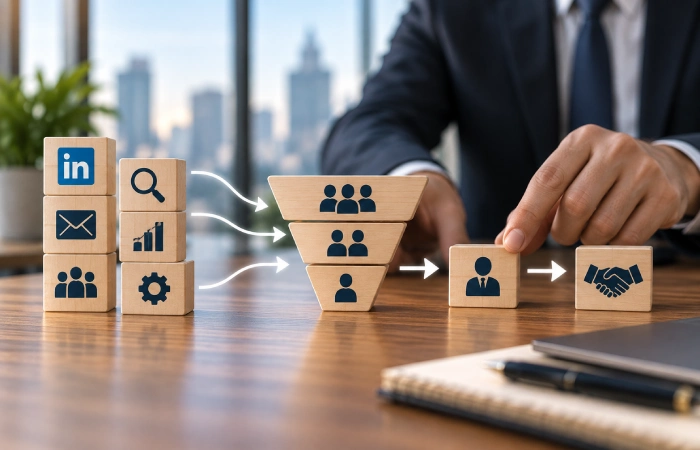
A staged rollout beats launching every channel at once: start with cold email (lowest tool cost, fastest feedback, results in one to two weeks), add LinkedIn prospecting in week two, publish ongoing SEO content for long-term compounding inbound, and layer in a referral workflow once outbound is producing steady conversations, typically after four to six weeks, according to Leadscrape’s 2026 playbook. Each channel added this way reinforces the others rather than requiring a separate team to manage in isolation.
Most of what‘s working today is signal triggered outreach. A job move, fund announcement, pricing-page hit, all trigger a highly personalized, relevant message as opposed to scheduling a batch send of a one size fits all mailer. A SaaS shop selling to platform engineering teams, for example, can have a Firmographic filter (size, stack) married to a timely signal (funded, series B announced) to trigger an outreach within the week the fund news hits, responding to the prospects question of “why now?” before they need to ask.
FAQ
What is B2B lead generation?
B2B Lead Generation: the process of discovering target businesses (companies that match your ideal customer profile), discovering the relevant contacts (people inside of those companies that have the answers you are seeking), and capturing sufficient information that would enable you to progress them into a sales conversation. Inbound (content, SEO, forms) and Outbound (cold email + LinkedIn outreach) campaign strategies are involved in B2B lead generation and most successful 2026 programs run them both concurrently.
What is the B2B lead generation funnel?
The B2B lead generation funnel is the journey a contact takes from initial awareness to becoming sales-ready; that is, top-of-funnel awareness, middle-of-funnel consideration, bottom-of-funnel decision. By 2026, consumers will tilt the funnel by showing multiple lower-commitment behaviors instead of siloing on a single gated-content form fill.
How do you generate B2B leads on LinkedIn?
Most successful LinkedIn lead generation is a process of an optimized profile, a content engine to a messenger service built around pain points, triggered outreach – not to mass message everyone who engaged with a post, but to make contact when there was a real signal (profile visit, job move, attendance at an event, not an engagement). Numbers of engagement are a terrible quality signal by themselves; a process to check engagers against your ideal customer profile matters more than just engagement numbers.
Is cold email still effective for B2B lead generation in 2026?
Yes, but success rate is best seen to vary tremendously depending on list quality, sales offer and deliverability infrastructure a highly targeted, well warmed-up sending domain can deliver multiple reply-per-message rates compared with a huge random batch. To get an inbox, send quality matters: statistically, 1 in 6 cold email messages will never get to one, so the deliverability infrastructure is an absolute prerequisite, not a secondary concern.
What’s the difference between B2B and B2C lead generation?
B2B lead generation focuses on companies and their buying groups complex sales processes with longer sales cycles, larger transactions, and buying decisions made by a group of people rather than an individual. By contrast, B2C lead generation often deals with individual consumers who have shorter, less complex purchase decisions. Less account-based management is typically needed.
Conclusion
Before adding a new channel, check whether your current funnel is actually capturing the interest you already have — most teams chasing a “we need more leads” problem actually have a “we’re only counting form fills” problem. Fix the counting first; the channel mix matters less than most guides suggest.

I’m Thomas — Editor & Admin of incmarketingplace, Blogger, and Senior SEO Analyst. writer at Inc Marketing Place, sharing insights on SEO, branding, content marketing, and online business growth. I focuses on creating practical and easy-to-understand content for marketers, entrepreneurs, and growing businesses