

100+ Blog Content Ideas That Actually Drive Traffic in 2026

Last Updated: September 18, 2026
Staring at an empty content calendar is the most common reason blogs stall out. The fix isn’t inspiration — it’s a stocked list you can pull from, organized by the kind of post you actually need that week. This guide sorts more than 100 blog content ideas into five practical categories, and pairs each one with the process behind picking them, so you’re not starting from zero next quarter either. It fits into a broader content marketing strategy rather than replacing one — use it as the tactical layer underneath your bigger plan.
Blog content ideas are specific topic concepts a blog can turn into posts, drawn from reader questions, keyword gaps, and current industry trends.
Blog post ideas for beginners
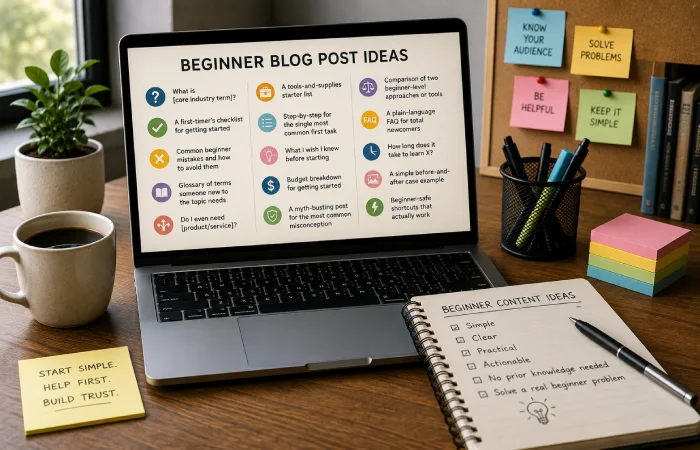
Beginner-friendly posts work because they ask nothing of the reader — no prior context, no jargon, just a clear answer to something they searched. If you’re new to a niche or a blog is new to a site, start here before reaching for anything more advanced.
- “What is [core industry term]?” explainer
- A first-timer’s checklist for getting started
- Common beginner mistakes and how to avoid them
- Glossary of terms someone new to the topic needs
- “Do I even need [product/service]?” decision post
- A tools-and-supplies starter list
- Step-by-step for the single most common first task
- “What I wish I knew before starting” post
- Budget breakdown for getting started
- A myth-busting post for the most common misconception
- Comparison of two beginner-level approaches or tools
- A plain-language FAQ for total newcomers
- “How long does it take to learn X?”
- A simple before-and-after case example
- Beginner-safe shortcuts that actually work
Evergreen blog topics

Evergreen posts will continue to attract traffic well after the original publish date, as long as they are addressing an issue that remains relevant regardless of industry paradigm shifts. That durability is exactly what makes them the backbone worth prioritizing before chasing anything trend-driven.
- Ultimate guide to [core topic]
- How-to tutorial for a recurring task
- Definitive checklist for [common process]
- “X vs. Y” comparison that stays relevant
- Glossary or terms cheat sheet
- Case study format template readers can reuse
- “Signs it’s time to [take an action]”
- Cost breakdown / pricing explainer
- Step-by-step troubleshooting guide
- “How to choose the right [product/service]”
- Historical overview of how the industry got here
- Frequently asked questions roundup
- Interview format with a recurring expert
- “What to expect” walkthrough for a process
- Pros and cons breakdown of a standard approach
Trending blog topics for 2026
Trend posts earn attention fast but expire fast too, so the ones worth writing are grounded in something actually shifting right now rather than a recycled prediction list. The most obvious transition affecting 2026 content is the one where research begins at all: more buyers are starting their searches inside AI chat solutions instead of traditional search, which completely alters the meaning of “ranking” for a post like this. That same transition is actually elevating credibility signals as a ranking necessity for AIfocused discovery.
- How AI search is changing what gets read
- What “zero-click content” means for your blog
- Building content that gets cited by AI tools, not just ranked
- Short-form video repurposed from long-form posts
- What EEAT signals actually look like in practice
- Query fan-out and topic clusters explained
- Why niche depth is outperforming broad coverage
- First-party data as a 2026 content advantage
- Interactive content formats worth testing this year
- What’s changing in how readers verify a source
How to generate blog ideas (a repeatable process)

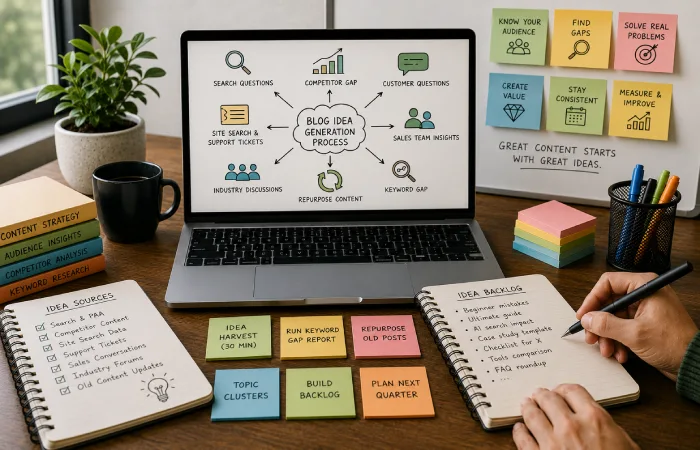
A stocked idea list runs out eventually — the real fix is a process you can repeat every quarter. Start with the four sources that consistently surface real, provable-demand topics rather than guesses.
- Pull autocomplete and “People Also Ask” questions for your seed keyword
- Audit top-ranking competitor posts for what they cover thinly
- Mine your own site search and support tickets for repeated questions
- Ask your sales or customer-facing team what prospects keep asking
- Run a keyword gap report against two or three competitors
- Repurpose a high-performing old post into a deeper or updated version
- Turn one long guide into five smaller spin-off posts
- Scan industry forums and comment sections for unanswered questions
- Set a recurring 30-minute “idea harvest” on the calendar
- Keep a running backlog doc so ideas don’t get lost between sessions
Blog ideas for small businesses

Small business blogs perform well when each bit of content refers directly to one of the business’ products or services, rather than providing general advice that has no connection to the brand.
- Behind-the-scenes look at how you make/deliver your product
- Customer success story or case study
- “Why we do X differently” positioning post
- Local guide or community-focused post (if location matters to the business)
- Seasonal or holiday-tied post relevant to your offer
- Team spotlight or “meet the people behind the business”
- Answer the most common sales-call question as a post
- “What’s included” breakdown of a service package
- Year-in-review or milestones post
- Comparison: doing it yourself vs. hiring you
- FAQ post built from actual customer questions
- A behind-the-scenes look at your process or workflow
- Partner or supplier spotlight
- “How we solved [specific customer problem]” story
- Announcement post for a new offer, framed around the reader’s benefit
FAQ
How many blog ideas should I keep on hand at once?
Aim for at least one quarter’s worth — roughly 12 to 13 topics if you’re publishing weekly. Fewer than that and you’ll end up writing under deadline pressure, which tends to produce thinner posts.
What’s the difference between an evergreen topic and a trending one?
Evergreen topics answer something that stays true regardless of the date — a how-to or definition. Trending topics are tied to a specific shift happening right now and lose relevance once that shift settles or changes again.
How often should a small business actually publish?
Not how often: Consistency is nothing if not one of the key principles in marketing. Freshmarketer.com speculates that a small business that takes the time to publish one well-researched page every fortnight will usually perform better than one that publishes four hastily written pages every fortnight.
What makes a blog topic idea good, versus just a title?
A good idea specifies who it’s for and what problem it solves, not just a subject. “Email marketing” is a subject. “Why your welcome email open rate drops after day 3” is an idea.
Start with one list, not all five
Pick the category that matches where your blog actually is right now — beginner posts if the blog is new, small-business posts if you have offers to tie content back to, trending posts if you’re already established and want to stay current. Draft three titles from that single list today, put them on next month’s calendar, and come back for a second category once those are scheduled. A content calendar filled all at once from a giant list rarely survives contact with an actual publishing schedule; one built a category at a time does.

I’m Thomas — Editor & Admin of incmarketingplace, Blogger, and Senior SEO Analyst. writer at Inc Marketing Place, sharing insights on SEO, branding, content marketing, and online business growth. I focuses on creating practical and easy-to-understand content for marketers, entrepreneurs, and growing businesses