New Social Media Apps Trending Right Now in 2026

Last Updated: September 18, 2026
I’m going to save you some time.
You’ve probably seen three or four articles this week claiming to know which new social media apps are trending. Most of them are written by someone who hasn‘t even opened half the apps on the list, recycling all the same names, same screenshots, same empty promises of “authentic connection.”
This isn’t that. What follows are the new social media apps actually gaining ground in the US right now — why people are sticking around, what makes each one different, and whether any of them are worth 30 minutes of your time.
Short version: a few of them genuinely are.
Trending Social Media Apps That Are Actually Worth Your Attention

The apps building real momentum in 2026 share one trait — they made a deliberate choice about what they wouldn’t do. No ads yet. No algorithmic feed pushing strangers at you. No pressure to post three times a day or watch your reach crater.
That restraint is what’s making them work.
Noplace — It’s Basically Myspace for Gen Z, and That’s Not an Insult
If you grew up spending hours customizing your Myspace page, Noplace will feel weirdly familiar. Colorful profiles. Personalized backgrounds. Two separate feeds — one for your friends, one for everyone else.
There’s no video. No algorithm surfacing content from people you’ve never heard of. You pick your interests, you connect with people, you actually talk. It sounds almost aggressively simple for 2026. That is precisely why it is working. Gen Z has grown up on apps that tried to do everything hence. Noplace does one thing. They seem to prefer it.
Threads — The One That Actually Stuck Around
A lot of people wrote Threads off as a Meta cash grab in 2023. Understandable. It looked like a desperate attempt to poach Twitter’s burning user base.
But here’s what happened: 400 million users. Meta’s continued investment in Threads reflects a broader shift toward conversation-focused social experiences, a trend highlighted in the company’s official Meta newsroom and platform updates covering user growth, creator tools, and engagement initiatives.Sixty-three percent growth year over year. And a feed that — compared to X right now — feels genuinely calmer. Less outrage. More actual conversation. Plenty of creators who left X have landed here and stayed, which means there’s real content being made, which means there’s reason to scroll.
It’s not perfect. Meta is Meta. But as a text-first social experience in 2026, Threads is by far the most viable option most haven‘t fully bought in to yet.
Ten Ten — A Walkie-Talkie App That Somehow Hit 21 Million Downloads
The premise sounds like something a fourth-grader pitched: hold a button, talk to your friends, let go. That’s it. No text. No editing. No filters. Your actual voice, sent instantly.
And yet — 21 million downloads. Because it turns out teenagers were exhausted by the performance of social media and just wanted to talk to their friends. Not post for followers. Not curate a grid. Just talk.
Ten Ten figured that out before anyone else did. It’s not going to replace Instagram. But for private communication between close friends, it’s filling a gap that nobody else bothered to fill.
Jagat — Social Media Meets the Physical World
Location-based social apps have failed so many times that most people stopped believing in the concept. Jagat is making a case that the timing was just wrong before.
Instead of posting into a global void, you’re connecting with people near you — at the same coffee shop, the same neighborhood, the same city. It’s still early. The user base is much smaller than the rest on this list. But this is a genuinely different idea than anything else being built today and as always different eventually finds an audience.
A few things worth noting across all four:
- Every one of these apps is winning by doing less, not more — that pattern is not a coincidence
- None of them lead with advertising as the core business model yet — that window will close, use it while it’s open
- Real relationships over reach is the unofficial motto of 2026 social media
Latest Social Networking Apps Built for People Who Are Over It

“Over it” is doing a lot of work in that heading, but it’s accurate. The latest social networking apps gaining real users in 2026 are almost all responses to the same feeling — that the big platforms stopped being built for people and started being built for advertisers.
These apps are the pushback.
Lemon8 — Pinterest Aesthetics Without the Pinterest Weirdness
Yes, it’s owned by ByteDance. Yes, that’s the TikTok company. Make your own peace with that.
What Lemon8 really is: a photo-and-text-based space that lives between a lifestyle blog and a social feed. Image curated but not overwhelming. Popular with food people, wellness people, travel people — anyone who wants to share something visually but doesn’t want to produce a Reel to do it. It’s found a real foothold with US audiences who want more depth than an Instagram post allows but less production than YouTube requires.
BeReal — Still Here, Still Doing the One Thing It Does
BeReal was supposed to change everything. It didn’t. It also didn’t die, which plenty of people predicted.
What it did was find a loyal niche: people who want a low-stakes, filter-free photo diary of their actual life. The app notifies you once a day at a random time. You have two minutes to take a photo — front and back camera simultaneously. That’s it. No going back and retaking it when you look better. No editing the lighting. Just your actual face and whatever you were actually doing.
For that specific use case, it’s genuinely good. It never became a mass platform. It doesn’t need to be.
Bluesky — Decentralized Social That’s Finally Making Sense to Normal People
Decentralized social media has been “almost mainstream” for about four years now. Bluesky is the first version of it that’s actually getting there — 3.5 million daily active users, growing steadily, and an interface that doesn’t require a computer science degree to understand.
The core promise: you own your data. Your followers come with you if the platform changes. No single company decides what you see or whether your account survives a policy change. That’s it. For people who’ve had accounts nuked by algorithmic decisions they didn’t understand, this is a meaningful offer.
PI.FYI — The App That Remembers Social Media Used to Be Fun
Launched in early 2024. No ads. No algorithm. Just people recommending things they actually like — restaurants, albums, films, books, whatever.
It’s small. It’s not going to show up in your analytics. But it has an energy that most platforms haven’t had since 2010, and that energy tends to attract exactly the kind of early adopters who shape what becomes mainstream two years later.
What these apps have in common:
- Private, small-group interaction is generating more engagement than public broadcasting
- Sharing genuine opinions — not aspirational content — is what users actually want to see
- Platforms that give users control tend to build loyalty that algorithm-driven apps can’t buy
The Viral Apps That Nobody Saw Coming
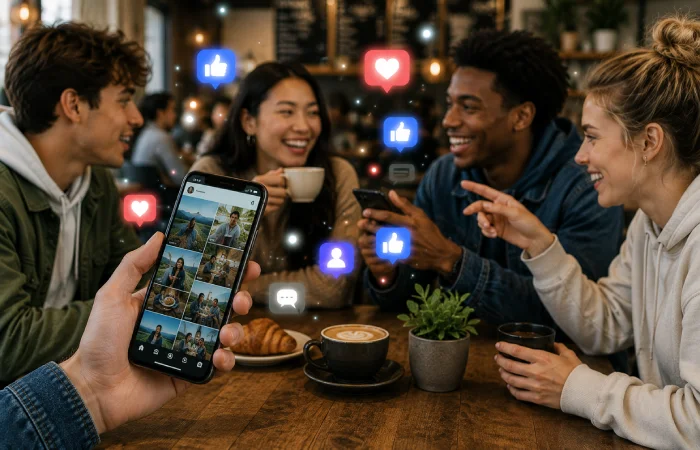
Some platforms grow through product excellence. Some grow through chaos. In the past 18 months, the US social media market has had enough chaos to launch a few things that had no business going viral — and a couple of them turned out to be genuinely good.
RedNote — The TikTok Refugee Story That Got Complicated
When TikTok’s US ban looked like a real possibility in early 2025, millions of Americans downloaded RedNote — a Chinese lifestyle platform — mostly as a protest. They called themselves TikTok refugees. They showed up expecting to find a translator and leave.
And many of them stayed. Because RedNote–once you get past the language barrier, is actually pretty good. It combines short video, lifestyle content, product reviews, and journaling of a travel trip into a stream that is curated but not in an overbearing way. The rush migration revealed a fact: American users didn‘t miss the specific platform of TikTok, they missed the feeling of TikTok. When another app provided that feeling, they adapted.
Substack Notes — Newsletter Platform Becomes Actual Social Feed
Substack built a real business on newsletters. Notes is what happens when you let those newsletter writers talk to each other — and to their readers — in real time.
For creators who spent years building audiences on platforms that could change the rules overnight, Substack Notes offers something genuinely rare: stability. Your subscribers are yours. No algorithm decides whether your posts reach them. The trade-off is scale — you won’t go viral on Substack Notes the way you might on TikTok. But the people who find you tend to stick around. In 2026, that trade-off looks better every month.
The bigger pattern here:
- Platform crises create migration moments — and migration moments create lasting new habits
- Voice and audio formats are still massively underexplored relative to their engagement potential
- Ownership of your audience is becoming a genuine competitive advantage, not just a talking point
Platforms to Watch Before They Get Big
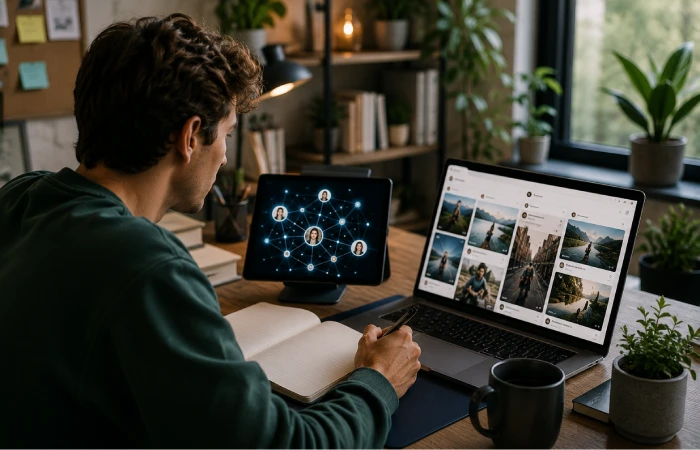
Not every app worth knowing about is already famous. Some of the most interesting things happening in social right now are happening at smaller scale — building deliberately, avoiding the mistakes of the last generation.
The structural shift that keeps coming up is decentralization. The growing interest in decentralized networks aligns with research from the Pew Research Center’s internet and technology studies, which regularly examines how platform trust, user control, privacy concerns, and evolving online behaviors influence social media adoption.The idea that your social graph — your followers, your content history, your identity on a platform — shouldn’t belong to a single company. Mastodon has been making this argument for years. Bluesky brought it to a bigger audience. More platforms are building on similar principles, and the technical infrastructure is finally mature enough that it doesn’t require users to understand any of it.
Three categories to watch over the next 12 months:
- AI-native social apps — platforms where the feed is personalized by AI, but transparently, without the surveillance advertising model that currently funds it on every major platform
- Spatial and AR social — apps being built for mixed reality environments, betting that the hardware will follow the software. It’s early. But it was early for mobile social once too.
- Micro-community platforms — ultra-specific interest spaces where the whole point is that not everyone is there. Think of it as the anti-TikTok: narrow reach, deep engagement, people who actually care about the topic.
On the AI front specifically — more than half of social media users say they’re concerned about brands using AI-generated content without telling them. That anxiety is creating a real competitive advantage for platforms and creators that stay visibly human. The window for that advantage will close eventually. Right now it’s wide open.
The short version:
- Decentralization is going from “interesting concept” to actual user behavior
- AI-shaped social feeds are coming whether we want them or not — the differentiator will be honesty about it
- Smaller, more focused communities are consistently outperforming massive ones on engagement
Where the Growth Is Actually Happening: The Numbers

Here’s the current picture as of mid-2026: Recent industry reporting from DataReportal’s global social media research and ongoing platform disclosures provide valuable context for understanding where user growth is accelerating and which emerging networks are successfully attracting new audiences.
| Platform | Monthly Active Users | Growth |
| Threads | 400 million | +63% year-over-year |
| TikTok | 1.6 – 1.9 billion | +17% year-over-year |
| 2 – 3 billion | +8.3% year-over-year | |
| Noplace | Early-stage, Gen Z surge | Rapid organic growth |
| Ten Ten | 21M+ downloads | Viral, primarily teen audience |
| Bluesky | 3.5M daily active users | Steady, loyal growth |
One number worth calling out separately: YouTube Shorts daily views went from 70 billion to over 200 billion — a 186% jump. Six and a half million creators are uploading Shorts every single month. Short-form video isn’t a trend anymore. It’s the default format, and every platform that matters has built around it.
The platforms not on this list — the ones that launched with big PR moments and then went quiet — share a few common traits. Vague value proposition. Forced network effects. Features built to impress investors rather than retain users. The apps actually growing in 2026 look nothing like that.
What the numbers tell us:
- Threads is the only major new platform that has genuinely broken through in the past two years
- Short-form video is now table stakes — the question is which platform you make it on
- Smaller platforms with passionate user bases often punch far above their MAU numbers on actual engagement
Why Most New Apps Die (And What the Survivors Did Differently)

A graveyard of the social apps that good press, good money and last less than 18 months. The ones that survive — the ones that end up on lists like this one — tend to share five specific traits. Worth knowing if you’re evaluating whether a new platform is worth your time.
- They have one specific reason to exist. Not a mission statement — a reason. Noplace exists because people missed personalizing their own space. Ten Ten exists because teens wanted to talk without performing. You can explain both of them in a sentence. That matters more than it sounds.
- Getting started doesn’t require effort. If you can’t figure out what to do in the first 90 seconds, you’re gone. The apps that survive know this. Onboarding that takes longer than two minutes is a product failure, not a user failure.
- Inviting your friends feels natural — not obligated. The best apps grow because users genuinely want other people in their lives to experience them. Apps that rely on forced invite mechanics or empty referral bonuses almost always stall.
- This is the identity. When an average user would describe him, they would say: “it‘s a walkie-talkie app”. When they would describe BeReal, they would say: “it‘s the one where you have 2 minutes to post, and the cameras turn off simultaneously”. You can picture them without having the image. Having that kind of clarity is rare.
- Creators get something real in return. Reach. Money. Ownership of their audience. Something. Without creator incentive, there’s no content. Without content, there are no users. This is the sequence every social platform has to crack, and most of them don’t.
There’s one more thing worth saying here. As AI-generated content floods social feeds, users are getting better at noticing when something feels fake — and getting more annoyed when it is. Platforms and creators that stay visibly human have a real advantage right now. That advantage won’t last forever. But in 2026, it’s real.
Should You Actually Join Every App on This List?
No. Genuinely, no.
The FOMO about new platforms is very real, and most of this is actually just media hype: every time a new app or platform launches, the media breathlessly speculates “this could be the next Instagram, early adopters are already winning.” Sometimes that’s true. More often it isn’t.
Most people who’ve built something real on social media — actual audiences, actual businesses — will tell you the same thing: pick two or three platforms and go deep. Spreading yourself across eight half-built profiles helps nobody, least of all you.
Before you download anything new, three honest questions to ask yourself:
- Are the people I actually want to reach using this app, or are they just talking about it?
- Does the format suit how I naturally communicate? Not how I think I should — how I actually do.
- Am I interested in the app because it‘s interesting or because I heard about it on three articles this week?
If you can answer those honestly, you’ll save yourself a lot of time. Experimenting is fine. Healthy, even. Thirty days on a new platform costs nothing and teaches you something. Just don’t mistake experimenting for a strategy.
So Where Does This Leave Us?
The social media market in 2026 is the most interesting it’s been since around 2012. Not because everything is new — most of these apps are built on ideas that have been floating around for years. But because users have finally had enough of the alternative.
Years of shrinking organic reach. Rising ad loads. Algorithmic feeds that show you what keeps you scrolling, not what you actually care about. Platforms that treat users like inventory and call it a business model. It added up. People started looking for the exit.
The new social media apps trending right now aren’t necessarily better in every technical sense. Some of them are pretty basic. But they’re built around a different set of priorities — actual connection, actual ownership, actual choice about what you see. And for a lot of users, that’s enough.
Find one that sounds like it fits. Give it 30 days. See what happens.
Want the full breakdown? Read the Social Media Apps Ultimate Guide → /social-media-apps-guide
FAQs
Q: What is the most popular new social media app right now?
Threads is, if we talk about like raw numbers, 400 million users and growing 63% annually. For gen z, Noplace is by far the one creating the most real buzz right now. They are solving very different problems for very different users.
Q: Which social media app is growing the fastest in 2026?
Threads is the most impressive growth story among newer platforms In total numbers, TikTok‘s user growth is still higher, but it‘s starting from 1.6 billion, so the growth rate comparison is a bit misleading. Threads built from scratch to 400 million. That’s the harder thing to do.
Q: What apps are Gen Z actually using instead of Instagram?
Noplace and Ten Ten for private, low-pressure social interaction with people they know.BeReal–for anyone who would like to do a photo diary without the performance. So even if TikTok stills dominates with the younger users, the pull away from the aesthetic pressure of Instagram is real and measurable.
Q: Are these new apps free to use?
All of them, for the core experience. Most are testing premium tiers or creator monetization features, but you’re not going to hit a paywall just trying the app. That’s unlikely to change soon — user growth is still the priority for all of these platforms.
Q: What does ‘decentralized social media’ actually mean for regular users?
It means the platform doesn’t own your stuff. On a traditional platform like Instagram, your followers, your content history, your account — all of it lives on Meta’s servers. They can change the rules, tank your reach, or close your account. On a decentralized platform like Bluesky, your data lives on infrastructure you control. If the platform shuts down or changes its rules, your followers come with you. It’s a meaningful difference once you’ve had an account affected by a platform decision you had no say in.
Q: Is BeReal still worth using in 2026?
Depends what you want from it. If you want mass reach or monetization, look elsewhere. If you want a genuine, filter-free record of your daily life shared with close friends, BeReal is still the best option for exactly that. It found its niche. It’s comfortable there.
Q: Which new platform is best for creators trying to build an audience?
Substack Notes and Bluesky if audience ownership is the priority. TikTok and YouTube Shorts if reach and monetization potential matter more. These are genuinely different goals with different right answers — the question is what you’re actually building toward, not which platform sounds most exciting right now.

I’m Thomas — Editor & Admin of incmarketingplace, Blogger, and Senior SEO Analyst. writer at Inc Marketing Place, sharing insights on SEO, branding, content marketing, and online business growth. I focuses on creating practical and easy-to-understand content for marketers, entrepreneurs, and growing businesses