Best Social Media Apps in 2026: Features, Trends & Marketing Benefits

Last Updated: September 18, 2026
Five billion people. Dozens of platforms. A new ‘next big thing’ announced every three months. And somehow, half the advice on which platform to use is already outdated by the time you read it. That’s where most businesses are in 2026 — overwhelmed and not entirely sure what’s actually worth their time.
This guide is the answer to that. Not a list of platforms ranked by user count — anyone can do that. What’s actually generating results, what’s quietly losing relevance, the tools that make it manageable, and the stuff competitors haven’t caught onto yet. Every major category gets its own section.
Running paid campaigns, managing client accounts, building a personal brand, or just trying to understand where your audience migrated to — start here. Individually independent, each topic also one link to that explanation for when you are in need of the whole picture on that specific topic.
| 5.24B
People on social media globally |
6.83
Avg. platforms per internet user |
2h 23m
Daily time spent on social apps |
| What Are Social Media Apps? (Featured Snippet Answer)
Social media apps are platforms — phone, desktop, web — where people post content, talk to each other, and build some version of an online presence. At one end there’s TikTok, Instagram, at the other LinkedIn, then a jumble of Reddit, Discord etc. More than 5.24 billion people use at least one every day in 2026. According to the DataReportal Digital 2026 Global Overview Report, global social media usage continues to grow alongside increasing cross-platform behaviour among internet users. |
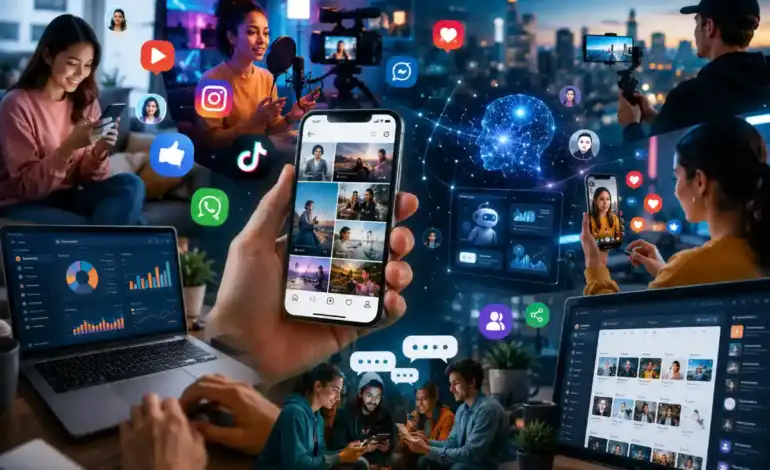
Best Social Media Apps in 2026
| PLATFORM OVERVIEW |
“Which social media app is best?” depends entirely on what “best” means for you. A fashion brand and a B2B software company could both be on Instagram — one of them is printing money, one is wasting time. Same platform. Completely different results. The app isn’t the variable. The fit between the app and the goal is.
With that said — scale matters too. Here’s the honest 2026 leaderboard by monthly active users:
| Platform | Monthly Active Users | Best Use Case | Strongest Content Type |
| 3.07 – 3.2 billion | Communities, local ads, retargeting | Video, groups, events, Marketplace | |
| 3 billion | Visual brands, shopping, creator collabs | Reels, Stories, carousels | |
| 2.8 billion | Customer messaging, broadcast lists | Private and group messaging | |
| YouTube | 2.85 – 2.9 billion | Search-driven video, evergreen tutorials | Long-form video + Shorts |
| TikTok | 1.5 – 2 billion | Discovery, Gen Z, impulse commerce | Short vertical video |
| 1.38 billion+ | China market, super-app ecosystem | Messaging, mini-apps, payments | |
| Threads | 400 million+ | Text-based conversation, brand voice | Short posts and replies |
| 1 billion+ | B2B leads, hiring, thought leadership | Articles, short video, carousels | |
| X (Twitter) | 611 million | Breaking news, public discourse | Text threads, Spaces, links |
| 100M+ daily active | Research, niche communities, trust-building | Posts, comments, AMAs |
Look at that table properly and a few things catch your eye. Facebook is still the world‘s biggest platform. People have been predicting its demise for nearly ten years. Still here, still growing. TikTok isn’t the biggest by user count — but 1.5 hours of daily use per person is more than any other app, by a distance. And Threads. Nobody expected a Twitter clone launched by Meta to hit 400 million users in under two years. Most people wrote it off. They were wrong.
5,000 LinkedIn followers who are exactly the right job title will generate more revenue than 500,000 Facebook followers who will never be your customers. Monthly active users is a platform stat. It tells you nothing about whether those people will buy what you sell.
| One Thing Most Guides Get Wrong
The standard approach: rank platforms by MAUs, declare a winner, publish the list. Genuinely useless as advice. A platform with 3 billion users who have zero interest in what you sell is worth nothing. A platform with 300 million users who are actively shopping in your category is worth everything. Stop optimising for size. Optimise for intent. |
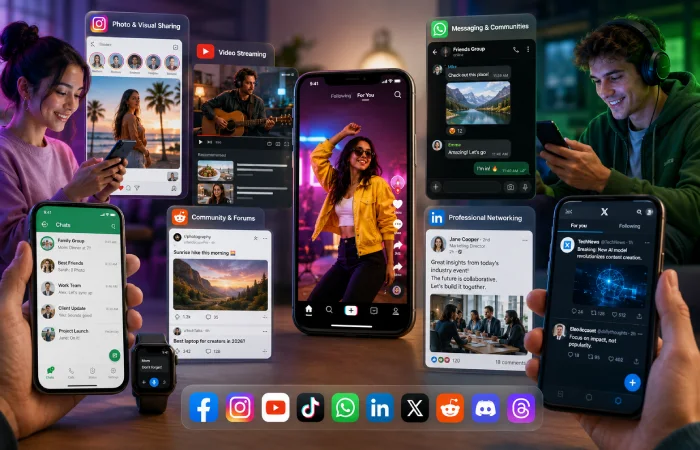
Social Networking Apps: Where Relationships Actually Form
| NETWORKING AND COMMUNITY PLATFORMS |
Most people use ‘social media’ and ‘social networking’ interchangeably. They’re not the same. Mixing them up is why a lot of brand strategies fail.
Social media is broadcast. You post, people watch or scroll past. Social networking is something else — it’s the group chat that’s been running for four years, the subreddit you check every morning, the LinkedIn connections who actually reply. People don’t stay on a platform for years because the content is good. They stay because leaving would mean losing something real.
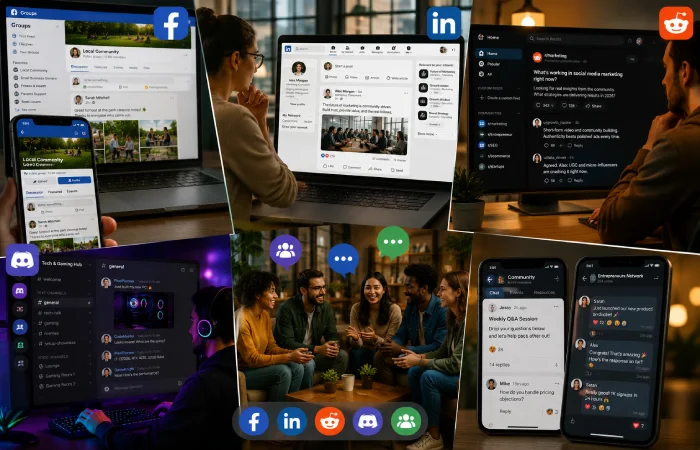
Where those actual relationships exist in 2026:
- Facebook Groups: 1.8 billion monthly users, and the main feed has basically become an ad delivery mechanism at this point. Groups is where people actually talk. For community-driven brands, it’s one of the last organic tools on Facebook that still delivers real engagement without paying for reach.
- LinkedIn: a billion members, and C-suite executives still posting original thoughts there every day. That’s genuinely unusual. A well-written organic post can land in front of a VP or a founder with no ad spend. The downside — and it’s real — is that LinkedIn audiences spot recycled content immediately. If you’re reposting Instagram captions with the hashtags removed, don’t bother.
- Reddit. 84% of consumers feel they are more confident to make a purchase decision if they have searched for it on Reddit and discussed it with other members of the community (Shopify, 2026). Read that again. A platform with no normal ad formats and zero tolerance for fake expertise is shaping buying decisions for tens of millions of people. You can’t buy your way in. You have to earn it by being genuinely helpful. It’s slow. It’s also one of the highest-trust brand-building channels available.
- Discord: niche communities with unusually high engagement. These people chose Discord specifically because they wanted somewhere that filtered out the noise. Gaming, tech, crypto, fitness – these communities are as involved as Facebook Groups haven‘t been for years. An engaged 2,000 member. Discord community grows faster than a 50,000 fan Facebook page.
- Nextdoor: 90 million verified US neighbours. If you’re a local service business — plumber, cleaner, landscaper, anything that serves a geographic area — this is warm audience territory. People on Nextdoor are literally asking their neighbours for recommendations. Being recommended there is worth more than almost any paid placement.
Nobody joined any of these communities to be marketed to. They joined because they got something from it — answers, connection, people who understood their problem. The brands that do well in community spaces act like members. They answer questions, share real knowledge, don’t push products in every post. Commercial results tend to come later, and stickier when they do.
Trending Social Media Apps Right Now (2026)
| NEW AND RISING PLATFORMS | Updated May 2026 |
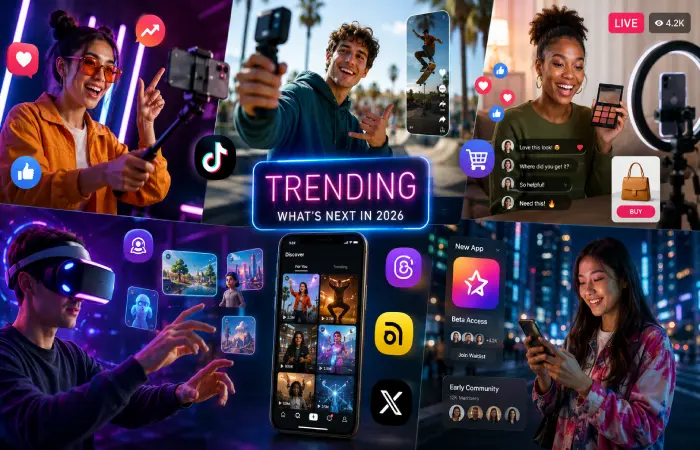
A new platform emerges every six months with ideas that are supposed to be the future of social media. Most of them have shut down or gone quiet within eighteen months. But occasionally something actually sticks — Threads went from zero to 400 million users. TikTok became the dominant content format across every platform. The brands who showed up early on both of those built real audiences before everyone else was paying attention.
What’s actually gaining ground in 2026 — with real numbers behind it, not launch-day press releases:
| App | What Makes It Trending (2026) | Who Should Pay Attention |
| Threads (Meta) | Hit 400M+ users in under 2 years — grew 45%+ in 12 months. Text-based, lives inside Instagram ecosystem. | Brands that want a Twitter/X alternative with lower noise and Meta-level distribution |
| Bluesky | Open-protocol, decentralised. Fastest growing among it users: X. 300-character posts, first AI moderation tools, Community Spaces launched. | Journalists, creators, tech-forward brands seeking early-mover advantage |
| YouTube Shorts | Surpassed 70 billion daily views. Indexed by Google. Drives YouTube channel subscriptions. | Any brand already creating video — this is free SEO-powered distribution |
| TikTok Shop | Social commerce crossed $100 billion. In-app checkout means users buy without leaving the app. | E-commerce brands selling products under $150 — this is the impulse buy engine of 2026 |
| LinkedIn Video | Fastest-growing content type on LinkedIn. Achieves 3x organic reach over text updates. | B2B marketers and entrepreneurs who want exposure without paying for LinkedIn advertising. |
| BeReal | Resurgent among Gen Z who are exhausted by curated content. Real-time, no-filter posting. | Youth-facing brands willing to show the unpolished side of their company |
What’s Slowing Down
Worth naming what’s going the other direction too. X lost a significant chunk of advertiser trust after 2023 and most major brands have either reduced or completely stopped paid campaigns there. Snapchat’s growth peaked a few years back — it’s stable but stuck in the 13–34 demographic with no signs of breaking out. Facebook Page organic reach has been declining for years and hasn’t reversed. A Page with 100,000 likes in 2026 reaches maybe 2–5% of them organically.
Knowing what to stop investing in is worth as much as knowing where to go. A lot of social media budgets get wasted on platforms that were relevant three years ago because nobody wants to admit the decision was wrong.
Social Media Platforms: How to Stop Guessing and Actually Choose
| PLATFORM SELECTION FRAMEWORK |
Strip away everything else in this guide and there’s one question underneath all of it: which platform should I actually spend my time on? Not the one with the most users. Not the one everyone’s talking about this week. The one that makes sense for the specific audience and goal I have. Here’s the framework:
| If your answer is… | Then your platform priority is… |
| My audience is mostly under 30 | TikTok first, then Instagram Reels, then YouTube Shorts |
| My audience is mostly over 35 | Facebook first, then YouTube, then LinkedIn if B2B |
| I sell to other businesses | LinkedIn first, Facebook retargeting second |
| I sell products people can see or try | Instagram or TikTok Shop first, Pinterest second |
| I want evergreen content that compounds over time | YouTube — it is the only major social platform that is also a search engine |
| I am one person with limited time | Pick one short-form video platform and be consistent for 90 days before adding another |
| I have an ad budget but no organic strategy yet | Facebook and Instagram ads with retargeting — highest ROI for most businesses with a budget |
| I want to build a niche community | Discord or Facebook Groups, depending on your audience age |
| Myth vs. Fact
“You need to be on every platform.” This advice has persisted for about a decade and it’s wrong. Every single brand that’s genuinely building something on social media right now is dominant on one or two platforms. Not mediocre on six. Algorithms are now sophisticated enough that inconsistent, low-engagement accounts get deprioritised. Six half-hearted accounts means six platforms ignoring you. |
Three questions that actually determine the right platform: Where does your specific audience spend time? What for a content-media can I produce which would not lead to my own self-destruction? What exactly are you trying to accomplish? Answer those honestly and the platform decision is usually obvious. The size of the platform is almost irrelevant by comparison.
Social Media Apps for Business
| BUSINESS AND B2B PLATFORMS |
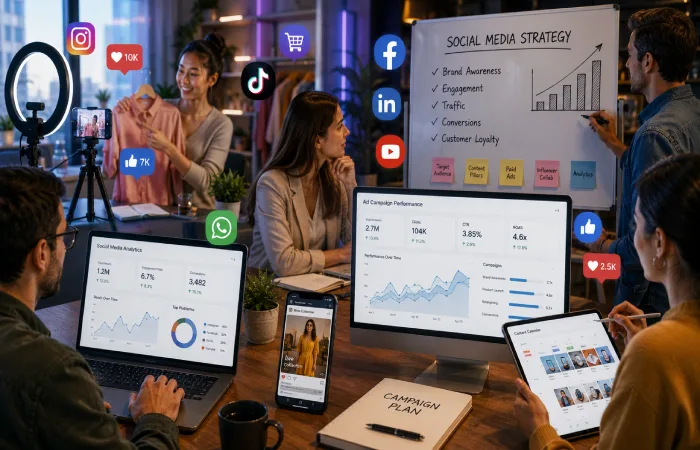
Entertainment and connection are what most platforms were built around. Commerce came later, often as an afterthought. A few platforms — TikTok Shop, Instagram Shopping, Pinterest — have built the purchase flow into the content experience itself. Those are the ones worth real marketing budget.
What each platform actually delivers when the goal is revenue rather than reach:
| Platform | Business Use Case | Strongest Content Format | Ad Potential in 2026 |
| B2B lead gen, thought leadership, talent acquisition | Short video, carousels, original articles | Highest B2B intent audience; CPCs are steep but conversion quality is high | |
| B2C community building, local service ads, retargeting audiences | Video, groups, events, Marketplace listings | Mature ad platform; Lookalike audiences and retargeting still deliver strong ROI | |
| E-commerce, product discovery, creator partnerships, influencer campaigns | Reels, Stories, Shopping posts | Strong for visual product categories — fashion, food, home, beauty | |
| YouTube | Product tutorials, demos, review-style content, search-driven traffic | Long-form evergreen video plus Shorts | Works for considered purchases where buyers research before buying |
| TikTok | Viral product discovery, younger B2C audiences, impulse buying | Short vertical video, TikTok Shop in-video purchase | Commerce is exploding here — TikTok Shop crossed $100B in 2026 |
| High-intent shopping, home, fashion, food, DIY, wedding planning | Static pins, Idea Pins, Shopping integrations | 53% of users say they actively shop on Pinterest — purchase intent is unusually high | |
| X (Twitter) | Real-time PR, customer service, brand commentary during live events | Text threads, Spaces, breaking news takes | Most brands have scaled back ad spend here in 2026 — organic still has niche value |
53% of shoppers use social media to find products before they purchase (Salesforce, 2026). More than half. Which means your social presence is already part of your sales funnel — the question is only whether you’ve built it intentionally or left it to chance.
| Practical Recommendation
B2B starting point: LinkedIn for organic content, Facebook and Instagram retargeting once you have any traffic worth retargeting. B2C depends on the product. Visual categories — fashion, skincare, interiors — belong on Instagram. Under-$150 impulse products belong on TikTok Shop. Home, food and DIY belong on Pinterest. Products with long research cycles belong on YouTube, where buyers go when they’re not yet ready to buy but want to understand their options. |
Video Sharing Apps: The Format That Took Over Everything
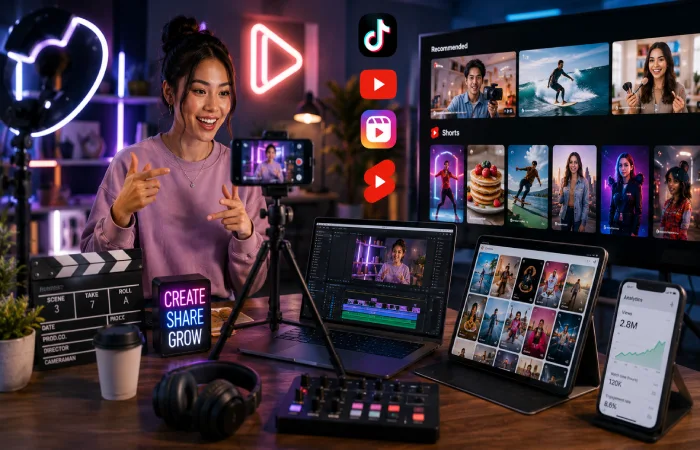
Short-form video became the default content format somewhere around 2023. By now, 2026, it’s not a format anymore — it’s just how social media works. YouTube Shorts is viewed by 70 billion users each month. creation of a new account is driven by Instagram Reels. Daily engagement on TikTok sat at 1.5 hours a day. Not weekly — daily.
Here’s what actually changed: every platform now supports the exact same format. Vertical, short, in-app editing, algorithmically distributed to non-followers. The format is identical across TikTok, Reels, Shorts, and LinkedIn Video. So the format stopped being a differentiator. What separates accounts now is whether the first two seconds of the video make someone stop scrolling — and whether you can produce that reliably.
| App | Format | Ideal Length | What It Does Best |
| TikTok | Vertical short-form | 15 seconds to 10 minutes | Discovery algorithm is unmatched — non-followers see your content from day one |
| YouTube | Long-form + Shorts hybrid | Any length; Shorts up to 60 seconds | Evergreen search-driven traffic; Shorts gets indexed by Google and drive Subscribers |
| Instagram Reels | Vertical short-form | Up to 90 seconds | Reach your current followers plus algorithmic discovery to new followers |
| YouTube Shorts | Vertical short-form | Up to 60 seconds | Google-indexed; growing YouTube channel; excellent for repurposing TikToks |
| Facebook Video | Landscape and vertical | Any length | Strong for reaching the 35+ demographic and running video retargeting ads |
| Snapchat Spotlight | Vertical short-form | Up to 60 seconds | Reaches 75% of 13-to-34-year-olds in 25+ countries — still relevant for youth brands |
| LinkedIn Video | Vertical and horizontal | 15 seconds to 10 minutes | Fastest-growing content type on the platform — enormous organic reach in 2026 |
| Pinterest Idea Pins | Vertical multi-slide | Up to 60 seconds per slide | High purchase intent audience; works well for DIY, food, home and lifestyle brands |
The Repurposing Strategy That Actually Works
The repurposing workflow: one video shoot, four platforms Upload to TikTok first (Using native caption and trending sounds). Repeat the same video to Instagram Reels (Using different caption, different tone, and different hashtag plan). Upload to YouTube Shorts. Rewrite it again for LinkedIn with a professional angle. Same content, four distribution channels, maybe an extra 20 minutes of caption work.
Buffer and Later both cross-post natively now. You write the caption variants, the tool does the scheduling and publishing. One person with a phone and 20 extra minutes can publish at the same volume as a team. That gap has essentially closed.
AI-Powered Social Media Apps in 2026
| AI + SOCIAL MEDIA | Content, Scheduling and Analytics |
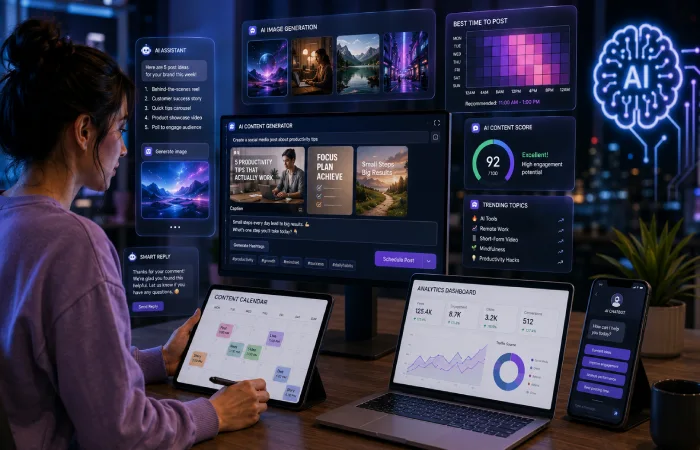
AI didn’t gradually integrate into social media. It landed all at once in about 18 months and now it’s everywhere — content creation, scheduling, analytics, the recommendation engines running inside the platforms. Most marketers are still catching up.
2025 This was the year AI content officially took over the internet from human written content (Hootsuite, 2026). Meta’s Vibes and OpenAI’s Sora are live products now, not research projects. And 94% of marketers have AI somewhere in their social media workflow. That number means it’s not a competitive edge anymore — it’s the baseline expectation.
| 94%
Marketers using AI for social in 2026 |
88%
Who use AI tools daily |
83%
Say AI lets them create significantly more content |
Where AI Is Actually Being Used Right Now
- Caption and content generation — OwlyWriter, Predis.ai, ContentStudio: give it a brief and get back a platform-formatted caption, image concept, or video script. The speed improvement isn’t incremental — it’s the kind of difference where a first draft that used to take a morning now takes twenty minutes. That’s 5–10x, consistently, across teams that have tracked it.
- Scheduling optimisation: AI tools analyse your audience’s actual engagement patterns and either tell you the best time to post or just book it automatically. The ‘what time should I post’ question has basically been solved. Move on to something more important.
- Social listening: Sprout Social and Hootsuite (via Talkwalker) track brand mentions, competitor moves, and sentiment shifts across every major platform at the same time. The value isn’t in the monitoring itself — it’s catching a shift in sentiment or a brewing PR issue while it’s still small enough to manage.
- Feed personalisation is where AI affects you whether you opt into it or not. TikTok, YouTube, and Facebook all run AI recommendation engines that determine what gets shown to each user. Your video isn’t competing with competitor videos. It’s competing with whatever the algorithm has predicted that specific person most wants to watch right now. That’s a fundamentally different content problem than it was five years ago.
- Meta’s Vibes and Sora are early enough that they don’t require immediate attention. But they represent the direction — platforms where the majority of content is AI-generated by default. Consumer adoption is low right now. The trajectory isn’t.
| The Tension You Need to Know About
Nearly a third of consumers say they’re less likely to buy from a brand when the content is obviously AI-generated (Hootsuite, 2026). That’s not a small number. People feel when there’s no real human perspective behind something. The brands handling this correctly aren’t using AI to replace their voice — they’re using it to produce their voice faster and at higher volume. AI writes the draft. A human decides whether it’s right. |
Social Media Management Apps
One account is manageable manually. Two gets annoying. Three and you start missing comments, forgetting what posted where, spending an embarrassing amount of time just on scheduling. Past that point a management tool isn’t optional — it’s the only way to stay on top of it without it eating your entire week.
All of these tools centralise scheduling, publishing, inbox management and analytics. Here‘s how the main ones look in 2026:
| Tool | Best Fit | Standout AI Feature | Starting Price (2026) | Platforms |
| Hootsuite | Agencies and larger teams managing 5+ accounts | OwlyWriter AI for captions + Talkwalker for social listening (Business plan) | $99/mo — 1 user, 10 accounts | All major platforms |
| Sprout Social | Brands prioritising engagement and customer intelligence | Deep sentiment analysis, AI-suggested reply drafts | $199/mo | All major platforms |
| Buffer | Solo creators and small teams on a budget | Ai content recommendations + simple cross-posting | Free tier; paid from $6 a month | 7 platforms including Mastodon |
| Later | Creators and visual brands (Instagram, TikTok, Pinterest) | AI caption writer + Link in Bio tool | Starting at $16.67/mo | Instagram, TikTok, Pinterest, Facebook, LinkedIn |
| ContentStudio | Content marketers doing high-volume publishing | AI writing + Zapier automation workflows | $19/mo | All major + Tumblr |
| Predis.ai | Creators who need text, image and video content in one place | Generates posts including visuals from a single brief | $29/mo | All major platforms |
Which One Should You Actually Get?
For solo creators and small businesses: Buffer free tier first. It does more than you’d expect and upgrading only makes sense once you’ve actually hit the limits. For marketing teams running multiple brand or client accounts: Hootsuite if you want the broadest feature set; Sprout Social if the priority is customer engagement and reputation rather than just getting posts scheduled.
The almost-universal mistake: set up the scheduling, never open the analytics. Every tool on this list is generating data about what’s working and what’s being ignored. Most teams look at maybe 10% of it. The answer to ‘what should we post more of’ is usually already in the reporting tab.
Four Mistakes to Avoid With Management Tools
- Scheduling and disappearing: the tool publishes the post, it doesn’t handle the replies. Someone still has to show up for the comments and DMs.
- Copy-paste the same caption everywhere: each algorithm is rewarded in their own way in what seems to be native language. A LinkedIn posts will have to sound like they were for a different audience than a TikTok caption because it is.
- Over-buying on day one: the free tiers on Buffer and Later are genuinely capable. You don’t need enterprise social listening tools until you have the brand volume to make them useful.
- Ignoring the reporting tab: most teams use maybe 10% of the analytics their tool already provides. The insights about what to do next are already in there.
2026 Social Media: Numbers Worth Knowing
| Metric | Figure | Source |
| Global social media users | 5.24 billion | DataReportal 2026 |
| Daily time spent on social apps | 2 hours 23 minutes average | Piktochart 2026 |
| Average platforms per user | 6.83 | Piktochart 2026 |
| Facebook monthly active users | 3.07 – 3.2 billion | Dreamgrow / TekRevol 2026 |
| Instagram monthly active users | 3 billion | Dreamgrow 2026 |
| TikTok monthly active users | 1.5 – 2 billion | Multiple 2026 sources |
| Threads growth (fastest major platform) | 400M+ users, grew 45%+ in 12 months | posteverywhere.ai 2026 |
| YouTube Shorts daily views | 70 billion+ | posteverywhere.ai 2026 |
| TikTok Shop social commerce value | $100 billion+ | posteverywhere.ai 2026 |
| Shoppers who discover products via social | 53% | Salesforce 2026 |
| Reddit purchase-confidence effect | 84% feel more confident after researching on Reddit | Shopify Feb 2026 |
| Marketers using AI for social media | 94% | posteverywhere.ai 2026 |
| AI content surpassing human content online | First occurred in 2025 | Hootsuite Social Trends 2026 |
Where Social Media Apps Are Heading Next
Five things worth tracking before they become obvious:
- Short-form video is table stakes, not a competitive edge. Every platform has it. Every brand is doing it. What separates accounts isn’t the format — it’s whether the first two seconds of the video work and whether that quality can be replicated every week. The creator is the differentiator. The format stopped being one.
- Social commerce is the default for impulse purchases now. TikTok Shop crossed $100 billion. Instagram Shopping and Pinterest Product Pins are not far behind. Selling anything under $150 without a social commerce setup means you’re watching buyers go through that process with a competitor who has one.
- The social graph is being replaced by AI-driven discovery. Platforms used to show you content from accounts you chose to follow. Now they show you what the algorithm predicts you’ll engage with. For a new account with zero followers, that’s a real opening — good content gets distribution regardless of follower count. For an established brand page that spent years building a following and expects that following to see their posts — the dynamic has changed.
- Age regulation is moving fast and most marketers aren’t planning for it In 2026 Australia made it illegal for those under-16 to use TikTok, Instagram, Facebook, Snapchat and YouTube. Other countries are considering laws similar to this one. If teen or pre-teen audiences are part of your target demographic, the platform access assumptions you’re building on may not hold in 12 months.
- Raw, unscripted content is outperforming polished production in engagement metrics right now. The reason isn’t that audiences suddenly changed what they like. It’s that AI has filled feeds with near-identical polished content and people are unconsciously gravitating toward anything that feels like a real person. An unplanned opinion, an obvious mistake left in the edit, a genuine reaction — these are getting disproportionate engagement because they’re now rare. Being visibly human is, genuinely, a competitive advantage.
Frequently Asked Questions
Q: What are social media apps?
These are profiles that people share information and build connections with others on line. Tik Tok, Insagram, LinkedIn, Reddit, Facebook, Whats App, Discord are all social media apps. Hootsuite and Buffer are not they‘re applications for managing those apps, not apps themselves.2006 statistics: over 5.24 billion daily users worldwide.
Q: Which social media app has the most users in 2026?
Based on user numbers, Facebook has 3.07–3.2bn MAU, while Instagram and WhatsApp are both around 2.8–3 bn; TikTok has a lower MAU number but by one metric time spent wins; 1.5 hours a day per user, more than any other platform in consistent daily use.
Q: What is the best social media app for a small business?
Facebook + Instagram is a large share of most small biz already large audiences, mature ad targeting and usable organic tools. Pinterest can be useful if you‘re visual, LinkedIn if you sell to other businesses. But really, it doesn‘t matter much what the platform is; you need to dominate one platform first.
Q: What is the fastest-growing social media app right now?
Threads: 275 million to 400 million-plus users in under 12 months. That growth rate hasn’t been matched by any established platform. For content formats specifically — not whole platforms — YouTube Shorts and LinkedIn Video are growing faster than anything else right now.
Q: How many social media apps should my business use?
One or two, done well, beats five done badly. No exceptions. Begin with the platform which is the most popular with your audience and create a ongoing, real, replicable system. Build a real, repeatable system there. The second platform is a question for later — after the first one is working.
Q: What are the best AI social media management tools in 2026?
Hootsuite: the most comprehensive suite of AI features including Only Writer for content creation and Talkwalker for social listening. Buffer: best price-to-value ratio for small teams and solo creators. Predis.ai: specifically useful if you need text, image and video content produced from a single brief. Meta’s Vibes and Sora: too early to build into a workflow, worth monitoring.
Q: Which social media platforms are trending in 2026?
Threads: 400 million+ MAUs, up 45% in 12 months. YouTube Shorts: 70 billion+ videos views / day. TikTok Shop: $100 billion social commerce. LinkedIn Video: the fastest growing content type of the platform by engagement. Bluesky: gaining users fast, mostly the ones who left X looking for something less turbulent.
Bottom Line: Choosing the Right Social Media Apps in 2026
The pattern across brands that consistently win on social media: they’re almost never on the most platforms. They made a deliberate choice about where to focus, showed up consistently, and built something that felt like it was for the people watching — not for the algorithm or the quarterly report.
The tools are genuinely better than they’ve ever been. The data is more available. The reach potential is higher. None of that is the bottleneck. What most businesses go wrong in social media is that they go too shallow and too broad. Choose the right thing and get into the detail. Everything in this guide links to a deeper resource when you’re ready.
Use this as your starting point. Use the linked guides to go further on whatever matters most for your situation. And if you’re genuinely unsure where to begin — pick the one platform your audience actually uses, produce ten pieces of content you’re genuinely proud of, and look at what the data says after. That’s still the most reliable starting move, in 2026 and probably beyond it.

I’m Thomas — Editor & Admin of incmarketingplace, Blogger, and Senior SEO Analyst. writer at Inc Marketing Place, sharing insights on SEO, branding, content marketing, and online business growth. I focuses on creating practical and easy-to-understand content for marketers, entrepreneurs, and growing businesses