
LinkedIn Advertising: Complete Guide to LinkedIn Ads
Last Updated: September 28, 2026
LinkedIn ads cost more per click than other social media platforms and that higher price is intentional. Companies pay more because they can target users by job title, seniority and company—going beyond guesswork based on interests or demographics. Knowing how LinkedIn’s ad auction works understanding the costs across different ad formats and being able to measure return on investment after launch are key. These skills make the difference between a channel that pays for itself and one that just wastes money. For more, on how LinkedIn compares to paid social platforms check out this guide to social media advertising strategy.
LinkedIn advertising is a paid marketing system that runs through Campaign Manager. It allows businesses to target professionals based on job title, industry, seniority and company size. Ads are shown using an auction system that considers both the bid amount and how relevant the ad is.
How Does LinkedIn Advertising Work?
LinkedIn advertising is managed through Campaign Manager, LinkedIns ad platform. A business sets an objective defines a target audience chooses an ad format sets a budget and launches a campaign. LinkedIn advertising then runs an auction for each impression that’s available, to advertisers who are targeting that member.
The five-step flow works the way, for every campaign type. First pick an objective—whether its awareness, consideration or conversions. Then choose the targeting criteria. After that decide on the ad format. Next set your budget. Finally once the campaign is live measure the results. LinkedIn’s bidding system makes sure your budget is spent wisely focused on the goal you picked not giving impressions to whoever bids the highest.
Because targeting uses self‑reported professional data—job title, employer, skills, seniority—rather than guessed interests LinkedIn campaigns usually reach a narrower more qualified audience than consumer platforms. That is also why LinkedIn campaigns cost more per impression and, per click.
What Types of LinkedIn Ads Are Available?
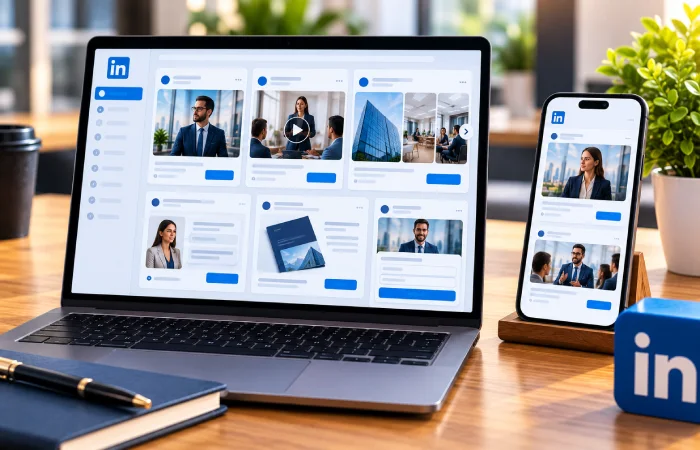
LinkedIn offers more than a dozen ad formats, grouped around a few core types:
- Sponsored Content. Image, video, carousel or document ads that appear directly in the LinkedIn feed; the most common starting format.
- Message. Conversation Ads. Personalized messages sent to a prospects LinkedIn inbox priced per send instead of per click.
- Text Ads. Budget‑friendly ads that appear in the right column on desktop best for always‑on brand presence or low‑cost A/B testing.
- Dynamic Ads. Ads that automatically use a viewers own profile data to personalize the creative.
- Lead Gen Forms. Pre‑filled forms attached to an ad that keep the prospect on LinkedIn than sending them to a landing page.
-
Document Ads. Preview eBooks, guides or whitepapers in the feed so people can read long‑form content without leaving the platform.
-
Thought Leader Ads and Article/Newsletter Ads. Sponsor posts or long‑form content, from executives or employees instead of the company page to build credibility.
Lead Gen Forms consistently produce strong results because they remove the friction of leaving LinkedIn to fill out a form, while Sponsored Content and video work well for educating prospects earlier in a longer B2B sales cycle.
How Does LinkedIn Audience Targeting Work?

LinkedIn ad targeting works by layering professional attributes — job title, function, seniority, industry, company size, skills, and Matched Audiences built from a business’s own contact or website-visitor lists — onto Campaign Manager’s audience builder, then narrowing that pool until it matches the buyer a campaign is meant to reach.
Targeting alone doesn’t decide who sees an ad, though. Every available impression triggers an auction among advertisers competing for that same professional’s attention, and LinkedIn’s ad auction weighs bid alongside relevance to maximize value for both the member and the advertiser, rather than simply awarding the impression to whoever bids highest.This mirrors how Facebook ad targeting works, where the auction rewards relevance, than a large bid. LinkedIns relevance signal however relies on context instead of behavioral interest data.
Practical implication: the tighter and higher up the targeting (VP-level and above at largest companies, for example), the smaller and more competitive the eligible audience which is the single biggest factor in LinkedIn‘s higher cost per click relative to consumer sites.
How Much Do LinkedIn Ads Cost?

LinkedIn ad costs in 2026 change a lot depending on the format and how specific the targeting is. The numbers shared this year show a range instead of just one number. From sources the average cost per click for Sponsored Content is usually between $5.50 and $18. The average cost per thousand impressions for Sponsored Content is $20 to $75. The cost for each Lead Gen Form fill is generally between $40 and $250. Text Ads are the affordable option, with an average cost per click of $2 to $4. Message Ads cost per send. Each one usually costs, between $0.25 and $0.80.
Two factors move those numbers more than anything else. Targeting specificity is the biggest lever: narrow, senior-level targeting (VP-and-above at large enterprises) can cost three to five times more than broad professional targeting, because the eligible audience is smaller and more contested in the auction. Industry competition is the second — technology, financial services, and enterprise software verticals consistently see the highest CPCs, since those categories compete hardest for the same decision-maker audiences.
For budgeting, LinkedIn’s platform minimums are a daily budget of $10 and a lifetime budget of $100, with a minimum CPC bid around $2. That’s workable for narrow testing, but a realistic working budget for most B2B campaigns — factoring in the $40–$150+ typical cost per lead — starts well above the platform minimum.
How to Measure LinkedIn Advertising ROI

LinkedIn advertising ROI is measured primarily through conversion tracking, set up with the LinkedIn Insight Tag installed site-wide and, ideally, paired with the Conversions API for server-side tracking that doesn’t depend on browser cookies. Once both are active, a business defines specific conversions — a lead form submission, a demo request, a free trial signup — and Campaign Manager attributes those actions back to the ads that drove them.
With conversion tracking live, ROI comes down to comparing cost per result (cost per lead, cost per Lead Gen Form fill, or cost per acquisition) against what that result is actually worth — the average deal size and close rate for that lead source. LinkedIn’s Conversions API also lets a business feed in offline conversions, like a sale closed weeks later in a CRM, so long B2B sales cycles don’t disappear from the ROI picture just because the conversion didn’t happen on-site.
Campaign Demographics can be viewed after conversion tracking is set up. Checking Campaign Demographics regularly is an idea. Campaign Demographics tells you which job titles, which industries and which company sizes are actually converting. This insight is often the way to discover whether Campaign Demographics targeting is too broad or too narrow.
FAQ
How much do LinkedIn ads cost?
Most Sponsored Content campaigns in 2026 are expected to have a cost per click between $5.50 and $18. The cost per thousand impressions for these campaigns will range from $20 to $75. When it comes to lead generation form fills the cost per lead is usually between $40 and $250. Text Ads remain the affordable option with a cost, per click ranging from $2 to $4. However when targeting is narrowed down to senior-level audiences the costs tend to rise and move toward the end of each cost range.
Is LinkedIn advertising worth it for small businesses?
It depends on whether the business sells to other businesses or to professional decision-makers specifically. LinkedIn’s precision targeting and buyer-intent audience make it strong for B2B SaaS, professional services, and high-value offers, but its cost per click is too high to justify for low-value consumer products.
What’s the minimum budget for LinkedIn ads?
LinkedIn requires at a $10 daily budget or a $100 lifetime budget. The minimum cost-per-click bid is $2.. In real use most B2B campaigns need more than the platform minimum to get enough leads. This is because LinkedIn’s typical cost-, per-lead is high so you need a working budget to make it work.
How does LinkedIn ad targeting work?
Targeting layers professional attributes — job title, seniority, industry, company size, and skills — onto Campaign Manager’s audience builder. Which ad actually gets shown is then decided by an auction that weighs bid alongside relevance, not by targeting alone.
Which LinkedIn ad format gets the best leads?
I have seen that Lead Gen Forms consistently perform well because the form is pre‑filled and the prospect never leaves LinkedIn. This removes the friction of a landing page. I also find that Sponsored Content and video ads work earlier in the funnel for educating prospects before they are ready to convert.
LinkedIns cost is higher, than Facebook or Google Ads which makes room for mistakes. That’s why the businesses that really succeed on LinkedIn are the ones who check Campaign Demographics against pipeline value on a regular basis. They don’t just look at cost per click. Move on. When the targeting matches the offer the higher cost often pays off from better lead quality. The premium itself starts to make sense when the leadsre valuable.

Creative marketing enthusiast sharing practical insights on digital growth, branding, and online strategies. Passionate about helping businesses succeed with simple, effective, and result-driven marketing solutions.