
Importance of Corporate Filings & Financial Data Matters in Business Decisions
Last Updated: May 21, 2026
In this advanced era, where many aspects of business operations are driven by data, businesses can no longer depend on their own personal assumptions when developing plans for future growth. In today’s marketplace, you need factual information when evaluating a potential business partner, determining whether you should enter an acquisition, or determining if a new or existing company is worth the development of an alternative investment opportunity.
Corporate filings provide reliable information regarding a company’s compliance with the regulations of various government entities, whereas financial data presents evidence reflecting the company’s financial position within a specific industry. When utilized in a manner, corporate filings and financial data collectively furnish management with analytical insights into the company’s operational and financial performance. By understanding and utilizing these types of information, organizations will be able to make more intelligent and confident decisions.
What Are Corporate Filings & Financial Data?
Corporate filings are documents filed with regulatory agencies by corporations. It typically contains annual reports, financial statements, and details about the company’s directors, shareholding structure, and compliance with regulations.
Financial Data is used to show how financially successful a corporation is by showing revenue, profits, liabilities, and assets.
Combined with corporate filings, financial data allows investors to determine the following:
- Who owns the corporation and who is on its board of directors?
- The corporation’s financial condition and profitability
- Whether the corporation is complying with regulations
- The historical performance of the company as a corporation.
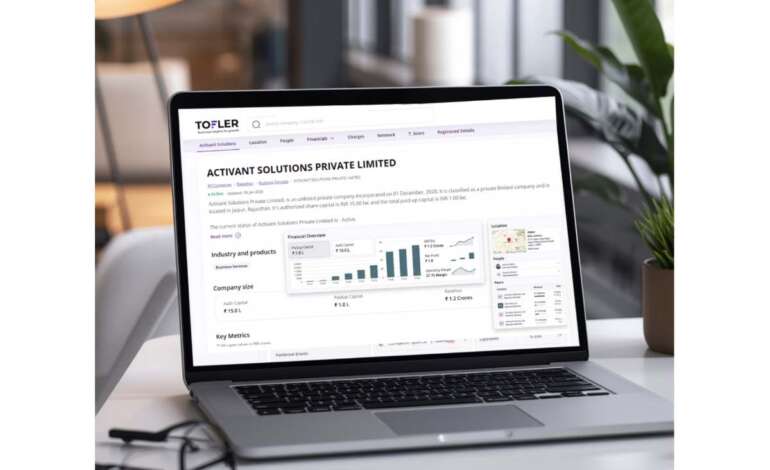
Companies often use platforms such as “Tofler – Corporate Filings & Financial Data” to access and analyze this information quickly.
How Companies Use Corporate Filings and Financial Data for Planning
Corporate Filings and Financial Data are an extremely valuable source of information to all companies, providing them with corporate data to assist with strategic decision-making and assessing risk.
The following are a few examples of how companies use it in their daily business activities:
-
Evaluating Business
Partners:
When businesses are establishing partnerships and entering into contracts with other businesses, they will usually perform due diligence on their potential partners. Company financial data provides companies with the information needed to determine if a potential partner is financially solvent and compliant with applicable laws.
Businesses use company information data to perform due diligence by evaluating the following:
- Revenue Growth
- Current Liabilities
- Directors and Owners
- Compliance History
Using Corporate Filings and Financial Data allows businesses to identify potential business partners that may be financially distressed.

-
Conducting Market Research on the Competitors
Competitor analysis is important for continuing to compete successfully in any industry. A set of information about a competitor’s financial growth, investment activity, and structural changes can be found in their corporate filings.
By conducting a competitor analysis, companies can:
- Find out who the market leaders are
- Learn about how competitors are expanding.
- Understand trends of financial performance
- Identify trends of new investment activity
By gaining this knowledge, companies can make adjustments to their strategies and continue to be competitive in dynamic and ever-changing markets.
-
Decisions for Investing and Acquiring Companies
Investors and companies that are currently exploring an acquisition will primarily use financial data that has been audited to support their decision-making process. Companies use corporate filings to assess whether their investment in a company would be worthwhile.
Important financial criteria include:
- Revenue growth
- Profitability (gross margin)
- Debt-to-equity (leveraging)
- Asset values
Any of the above points enables investors to make decisions based on fact, not on assumptions.
Importance of Data-Driven Decisions
Verified corporate data sources allow organizations to make better decisions than their competitors, manage risk more effectively, and discover new opportunities where others do not have complete information. The availability of structured insights allows decision-makers to create a solid foundation for strategic planning.
Some of the advantages of accessing corporate filings and financial data include:
- Less risk in conducting business
- Improved decision-making when choosing partners
- Improved Competitive Analysis
- Better quality of Investment Analysis.
Companies can successfully assess any given opportunity with the assurance that they have access to valid corporate intelligence and avoid costly errors.

Final Thought
With the ongoing growth of competitive pressures in the business world, being able to access trusted sources of complete and accurate corporate information has become even more critical than before. Through the provision of timely and accurate corporate filings and financial data on public companies, you will create a transparent platform for analyzing the operational, financial, and compliance aspects of an organization.
By utilizing reliable data sources, companies will be able to enhance their due diligence processes, analyze their competitors more effectively, and make more informed investment decisions using verified corporate intelligence. This enables them to gain a deeper understanding of all these areas and move forward with confidence and clarity.

Creative marketing enthusiast sharing practical insights on digital growth, branding, and online strategies. Passionate about helping businesses succeed with simple, effective, and result-driven marketing solutions.